How to Choose Outdoor Stone and Pavers for Coastal Ventura County
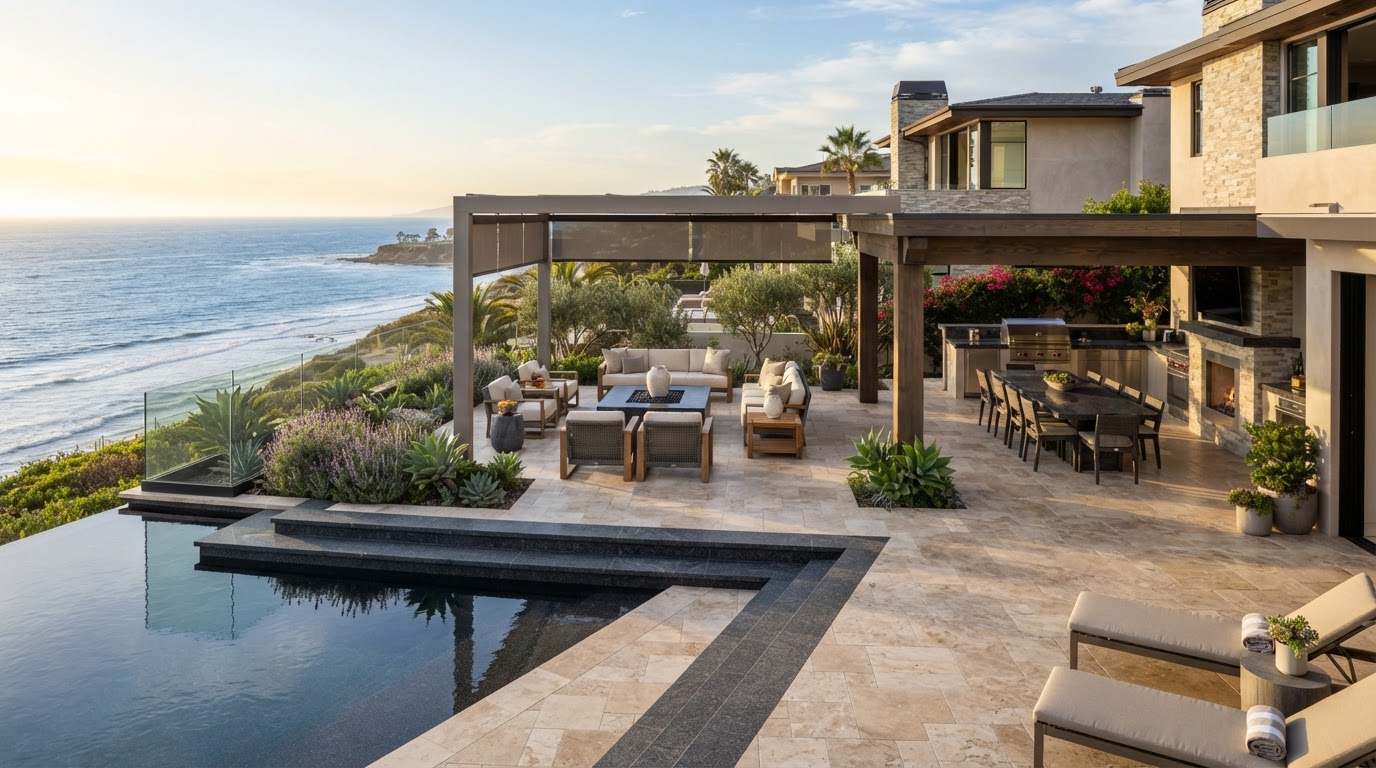
Choosing an outdoor material for a coastal property involves more than picking a color or texture. Salt air, moisture, sun exposure, drainage, and the way the space will be used all affect how a surface performs over time.
There is no single universally best hardscape material for every coastal property. The right choice depends on the specific product's physical characteristics, finish, intended application, exposure, installation requirements, maintenance expectations and how the material fits the surrounding landscape design.
Direct Answer
Natural stone, porcelain pavers, and concrete pavers can all work in coastal settings when the specific product is rated for exterior use and the installation accounts for drainage, wet-area exposure, and maintenance. The decision should be based on the actual product's documented characteristics, not on a broad material category or a single performance number.
How does a coastal environment affect outdoor stone and pavers?
Properties closer to the ocean may experience more salt exposure than inland homes, but exposure varies with distance from the coast, prevailing wind direction, shelter from nearby buildings, drainage, irrigation, and surrounding landscape conditions. Proximity to the ocean alone does not determine how an outdoor material will perform.
Salt carried in coastal air can become one source of soluble salts in porous materials. Where moisture transports salts into pores and the salts later crystallize, repeated exposure can contribute to surface deterioration. Actual performance depends on the material, pore structure, exposure, installation and maintenance. Not every coastal installation will experience this kind of deterioration.
Moisture from rain, irrigation overspray, pool splash, and condensation also contributes to wet-dry cycling. Good drainage, appropriate installation, and routine care help any surface perform better regardless of how close the property is to the water.
What matters most when choosing a coastal hardscape material?
Rather than choosing by material category alone, homeowners should evaluate the specific product. Key considerations include whether the product is intended for exterior use, its water absorption, surface finish, wet-area suitability, installation system, drainage, maintenance expectations, and supplier or manufacturer specifications.
The comparison below summarizes common options. Each row describes general characteristics; the actual product you select should be verified against manufacturer or supplier documentation.
| Material | Potential advantages | Things to verify |
|---|---|---|
| Granite | Dense and durable options are available for exterior applications | Absorption, finish, wet-area suitability, characteristics of the specific stone |
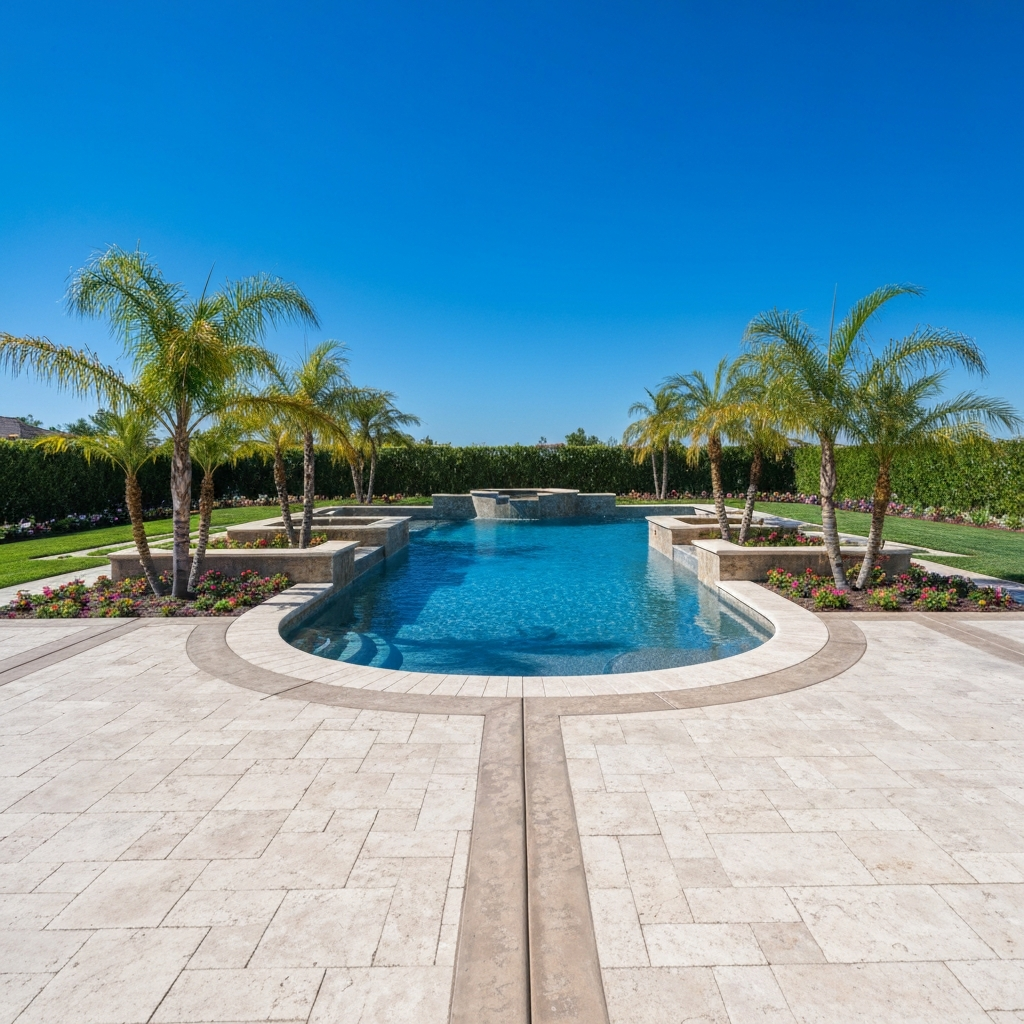
| Travertine | Natural appearance and commonly used in outdoor applications | Porosity, finish, maintenance, wet-area suitability, specific stone |
| Porcelain pavers | Very low-absorption products are available with many design options | Exterior rating, wet-area suitability, surface characteristics, installation requirements |
| Concrete pavers | Wide selection of colors, patterns and formats; individual units may be replaceable | Product specifications, finish, maintenance and installation requirements |
| Quartzite | Some dense, durable options may be suitable for exterior paving | Specific stone properties, finish, absorption and intended application |
Is granite a good choice near the coast?
Certain granite products can work well in exterior coastal applications because some granites are dense and have relatively low water absorption. However, "granite" covers individual stone products with varying properties, finishes, and characteristics. A specific granite product should be evaluated for water absorption, finish and surface texture, intended exterior use, wet-area suitability, thickness, installation system, maintenance requirements, and supplier specifications.
The principle is to choose the actual material and its documented characteristics, not merely the broad stone category. Granite is not universally superior to every other option, and not all granite products perform identically.
Is travertine suitable for coastal patios?
Travertine is used in exterior applications and can provide a natural, warm appearance. Its suitability near the coast depends on the specific stone, finish, installation, exposure, and maintenance expectations. Travertine is generally more porous than granite, so porosity, finish, wet-area suitability, sealer compatibility where applicable, and supplier recommendations should all be considered.
A sealer does not make travertine immune to coastal conditions, and premium-grade travertine should not be assumed to withstand coastal exposure without product-specific evaluation. Performance depends on the particular stone and how it is installed and maintained.
Are porcelain pavers good for coastal outdoor spaces?
Porcelain pavers are a manufactured product, not a natural stone. Exterior-rated porcelain can offer very low water absorption and a broad range of styles, colors, and formats. Some porcelain products are classified as "impervious" under ASTM water-absorption standards, meaning they absorb very little water. That technical classification describes a low absorption rate; it is not a guarantee against coastal or salt-related damage.
Outdoor porcelain pavers can be a strong option for exterior spaces when the specific product is designed and rated for the intended application. Homeowners should compare water absorption, surface characteristics, manufacturer specifications, installation requirements and wet-area suitability rather than assuming all porcelain products perform identically. Porcelain should not be described as salt-proof, maintenance-free, or universally non-slip.
What about concrete pavers and quartzite?
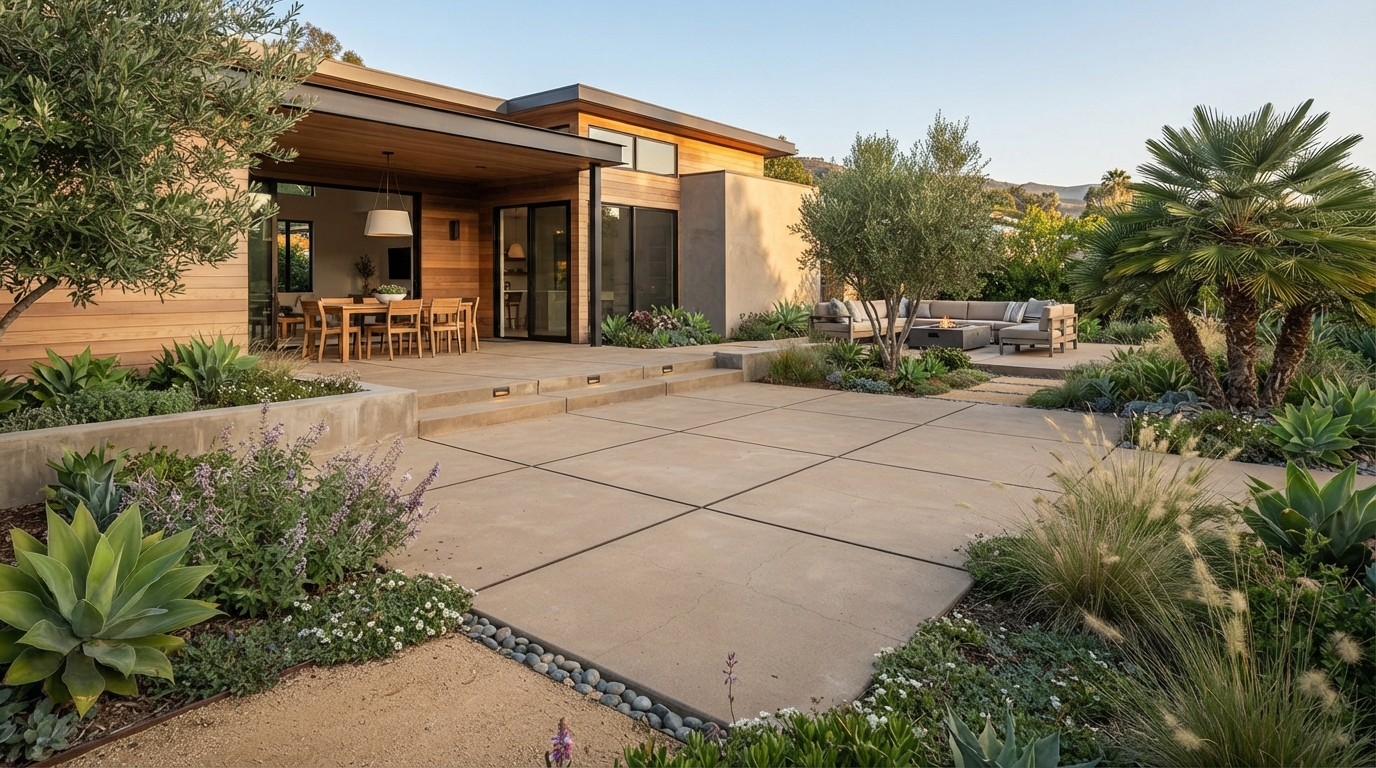
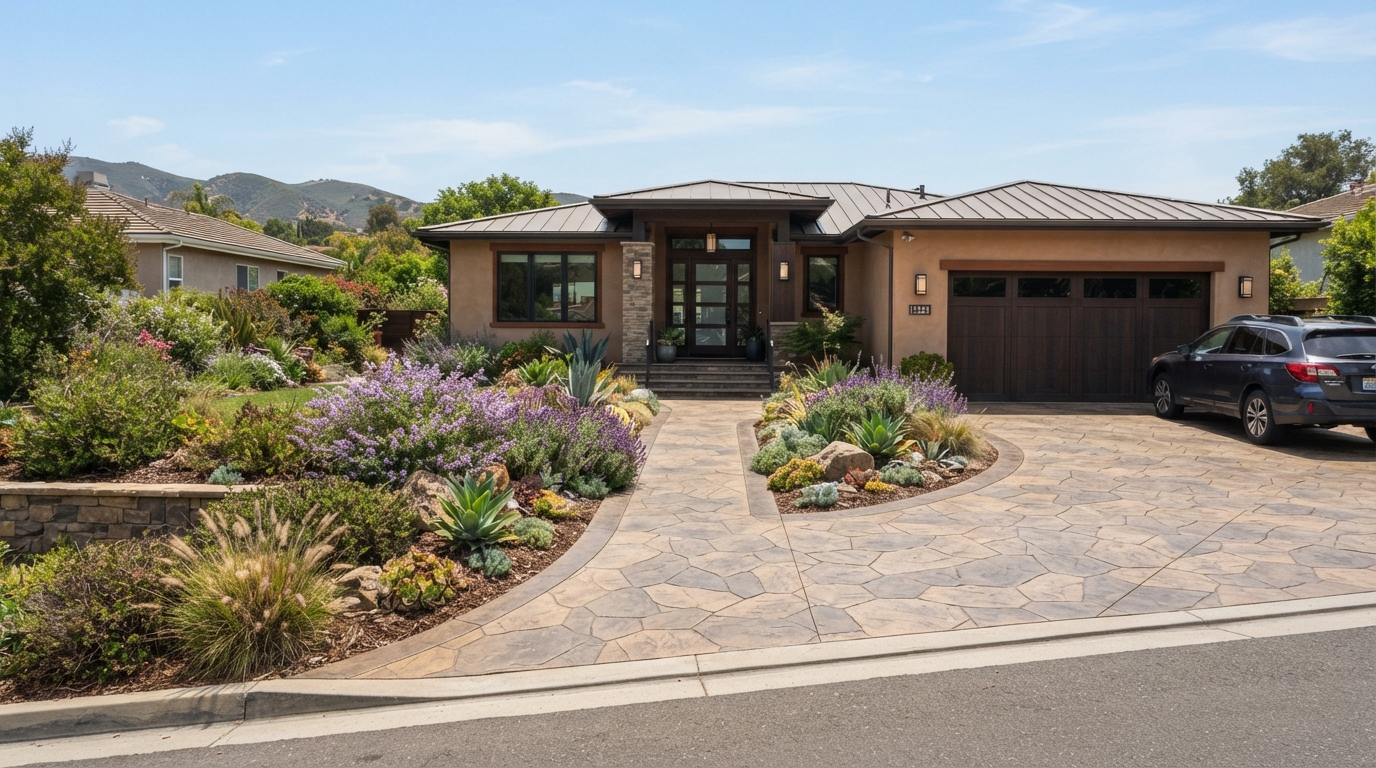
Concrete pavers are manufactured units, not natural stone. They offer a wide selection of colors, patterns, and formats, and individual units can sometimes be replaced if damaged. Performance depends on the specific product specifications, finish, installation system, drainage, and maintenance. Concrete pavers should be evaluated for exterior and wet-area suitability just like any other material.
Quartzite is a natural stone. Some dense, durable quartzite products may be suitable for exterior paving. As with granite and travertine, suitability depends on the specific stone's properties, finish, absorption, and intended application. Homeowners should verify product-specific characteristics rather than relying on the category name.
Does water absorption matter for outdoor pavers?
Water absorption describes how much water a material takes in under specified test conditions. Lower absorption can be helpful in exterior and wet-area applications because it may reduce moisture-related issues. However, lowest water absorption does not automatically mean "best material."
Overall suitability can also depend on surface characteristics, stone or product quality, installation system, intended application, climate exposure, drainage, maintenance, and aesthetic goals. Water absorption is one factor to review alongside manufacturer or supplier guidance, not a single number to choose a material by.
How should homeowners think about slip resistance?
Slip performance can depend on the exact product, surface finish, wet versus dry conditions, intended use, drainage, slope, contaminants, footwear, maintenance, installation, and pool or water exposure. A textured finish alone does not guarantee slip safety, and no outdoor surface should be described as slip-proof.
For pool decks, frequently wet areas, outdoor steps, and sloped surfaces, homeowners should verify that the exact product is rated by its manufacturer for the proposed exterior wet-area application. A single traction metric does not universally establish that a product is safe for every setting. Drainage, slope, and routine cleaning all affect real-world traction.
Does natural stone need to be sealed near the coast?
Not always. Some natural stone installations may benefit from an appropriate impregnating sealer, while others may not require one. Whether sealing is appropriate, which product should be used, and how often it may need to be reapplied depend on the particular stone, finish, exposure, and manufacturer or supplier recommendations.
Sealers should be compatible with the material. They do not make stone completely stain-proof, they do not make an unsuitable material suitable, and they do not create a waterproof barrier. There is no universal resealing schedule that applies to every stone. Follow the recommendations for the specific product rather than a generic timetable.
How do you maintain stone and pavers near the coast?
Practical maintenance depends on the material, but common considerations include:
- Removing deposited dirt, salt, and debris
- Fresh-water rinsing where appropriate
- Using cleaners compatible with the specific material
- Avoiding acidic cleaners on acid-sensitive or calcareous stone
- Watching for staining, efflorescence, or surface deterioration
- Inspecting joints and the surrounding installation
- Following supplier or manufacturer maintenance instructions
- Determining whether a sealer is appropriate for the particular material
Not every maintenance method works on every stone or paver. Harsh chemicals or pressure washing can damage some surfaces. Review manufacturer guidance before applying any cleaning product or sealer.
What should you ask before selecting a material?
- Is this exact product intended for exterior use?
- Is it suitable for the proposed wet or dry environment?
- What is its water absorption?
- What finish is proposed?
- How will the area drain?
- Is it being used around a pool?
- What installation system is recommended?
- What maintenance does the manufacturer or stone supplier recommend?
- Is sealing appropriate for this specific material?
- How will the material coordinate with the rest of the outdoor design?
Choosing materials for a coastal Ventura County property
Exposure can vary substantially between properties. Homes nearer coastal areas such as Ventura or Oxnard may experience different conditions than more inland properties, but every property is different. The same neighborhood can include sheltered lots, exposed lots, and properties with different drainage and irrigation conditions.
The most useful approach is to evaluate the actual product, the intended application, the site conditions, and the maintenance plan together. A material that performs well on one property may not be the right choice for another, even within the same community.
Choosing Materials for Your Outdoor Space?
Colima Landscape Inc. can help you plan how paving, patios, planting and other hardscape materials work together across your outdoor space. Schedule a consultation to discuss your property, design priorities and material preferences.
Book Consultation