How to Choose Pool Decking for a Southern California Backyard
Pool decking affects more than appearance. It influences barefoot comfort, wet-area traction, maintenance, drainage, and how the pool relates visually to patios, planting, and other outdoor spaces.
No single material is right for every property. The appropriate choice depends on the pool, the surrounding landscape, sun exposure, budget, product availability, and how the homeowner expects to use the area.
Direct Answer
Pool-deck materials should be evaluated for wet-area traction, surface temperature, maintenance, drainage, and compatibility with the surrounding outdoor-living area. Travertine, stamped concrete, and exterior porcelain each have different characteristics. No material is universally safest, coolest, or most durable, and none should be described as slip-proof or maintenance-free.
What should homeowners consider when choosing pool decking?
Before selecting a material, it helps to evaluate several practical factors together:
- Wet-area traction and surface texture
- Surface temperature in direct sun
- Maintenance requirements and cleaning
- Sun and pool-water exposure
- Drainage and surface slope
- Base preparation and installation method
- Repair considerations and product availability
- Pool coping transitions
- Adjacent patios and hardscape
- Budget and product availability
A pool deck that looks attractive in a photograph may perform differently under local sun exposure, wet conditions, and regular use.
How do travertine, concrete and porcelain compare?
Three materials are commonly considered for residential pool decks in Southern California. Each has different characteristics, and none is universally the right choice.
Travertine or natural stone
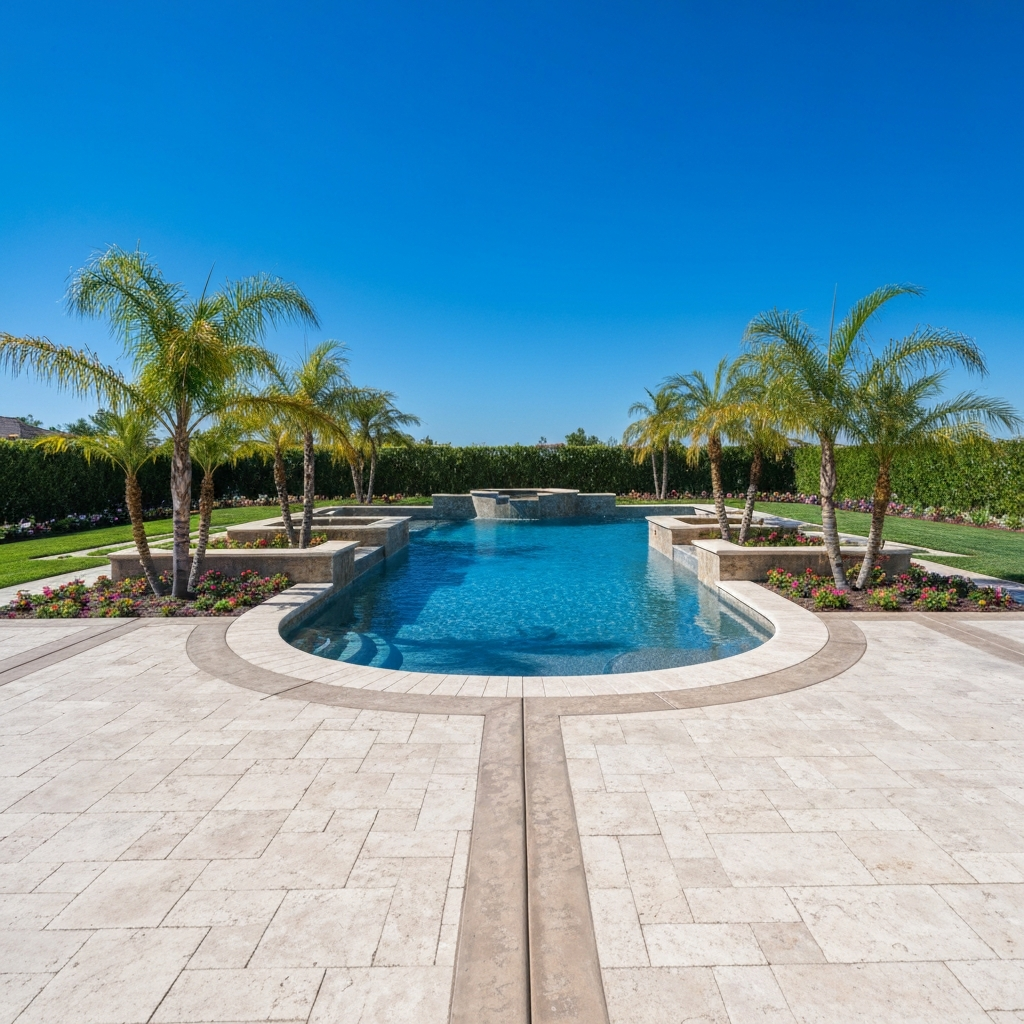
Travertine is a natural stone available in several finishes, colors, and formats. Its appearance varies naturally, which is part of its character. Lighter-colored travertine may feel more comfortable underfoot than darker surfaces under similar sun exposure, but no natural stone should be described as staying cool under every condition.
Wet-area performance depends on the specific product, finish, texture, installation, and maintenance. Some travertine finishes may provide more texture than a polished surface, but porosity alone does not establish slip resistance. Sealing may be recommended depending on the product and exposure, and natural stone can stain, weather, or show mineral deposits over time.
Architectural or stamped concrete
Stamped or architectural concrete offers design flexibility with a wide range of colors, textures, and patterns. A continuous poured surface can create a seamless look around the pool.
Concrete can develop cracks over time due to soil movement, settlement, or exposure. Surface texture and sealer selection affect traction, but anti-slip additives do not eliminate all risk. Sealers and coatings require periodic renewal, and repairing or matching a stamped concrete surface after a crack or stain can be difficult.
Exterior porcelain pavers
Exterior-rated porcelain pavers offer a consistent, manufactured appearance with specific product ratings for outdoor use. Some products are rated for wet-area applications, but indoor porcelain tile should not be assumed suitable for an exterior pool deck.
Stain and chemical resistance depends on the specific product and manufacturer documentation. Surface texture affects wet traction, and installation requirements differ from natural stone or concrete. If a product line is discontinued, finding a matching replacement paver may be difficult.
| Material | Potential advantages | Important considerations |
|---|---|---|
| Travertine or natural stone | Natural variation, timeless appearance, multiple finishes | Sealing, staining, weathering, product-specific wet traction |
| Architectural or stamped concrete | Design flexibility, continuous surface, color options | Potential cracking, sealer renewal, repair matching |
| Exterior porcelain pavers | Consistent appearance, product-specific ratings | Installation requirements, discontinued product risk, wet traction varies |
Which pool-deck materials feel more comfortable underfoot?
Surface temperature around a pool can be affected by material, color, finish, density, sun exposure, air temperature, and time of day. Lighter-colored surfaces may feel more comfortable than darker alternatives under similar conditions, but no material stays cool under every circumstance.
Homeowners should consider how the deck feels during the hours they expect to use the pool. A surface that is comfortable in the morning may become warm by mid-afternoon in direct Southern California sun.
What affects slip resistance around a pool?
Traction on a pool deck depends on surface texture, finish, sealers, coatings, maintenance, standing water, algae, debris, and wear. Water, sunscreen, and cleaning products can all affect how a surface performs when wet.
Pool-deck materials should be evaluated for traction under wet conditions. Applicable construction and safety requirements depend on the property, project, and governing jurisdiction. No outdoor surface should be described as slip-proof. Homeowners should review manufacturer documentation for the specific product and its intended exterior wet-area application.
How should pool decking coordinate with pool coping?
Pool coping is the material at the pool's edge that transitions from the water to the surrounding deck. The decking is the surface beyond the coping. Coordinating the two involves considering material transitions, color and texture continuity, edge comfort, and maintenance differences between materials.
Different materials expand, contract, and wear differently. A visual match does not guarantee that two materials perform the same way under wet conditions or over time.
Why does drainage matter around a pool deck?
Standing water on a pool deck can affect traction, comfort, and material performance. Proper drainage planning considers surface slope, drainage paths, adjacent structures, planting areas, and existing grades. Water should move away from the pool, the home, and walking surfaces without creating new problems.
Drainage requirements depend on the property and site conditions. Some situations may require evaluation by an appropriately qualified professional.
How much maintenance does each material require?
No pool-deck material is maintenance-free. Depending on the product, location, and exposure, maintenance may include routine cleaning, joint-material attention, sealing where appropriate, coating or sealer renewal, stain treatment, and inspection for movement or damage.
Manufacturer-recommended care should be reviewed before using sealers, chemicals, or pressure washing. Appropriate product selection, installation, drainage, and ongoing maintenance can help extend a pool deck's useful service life, but maintenance needs and longevity vary by material, product, installation, and site conditions.
How should a pool deck connect with the surrounding yard?
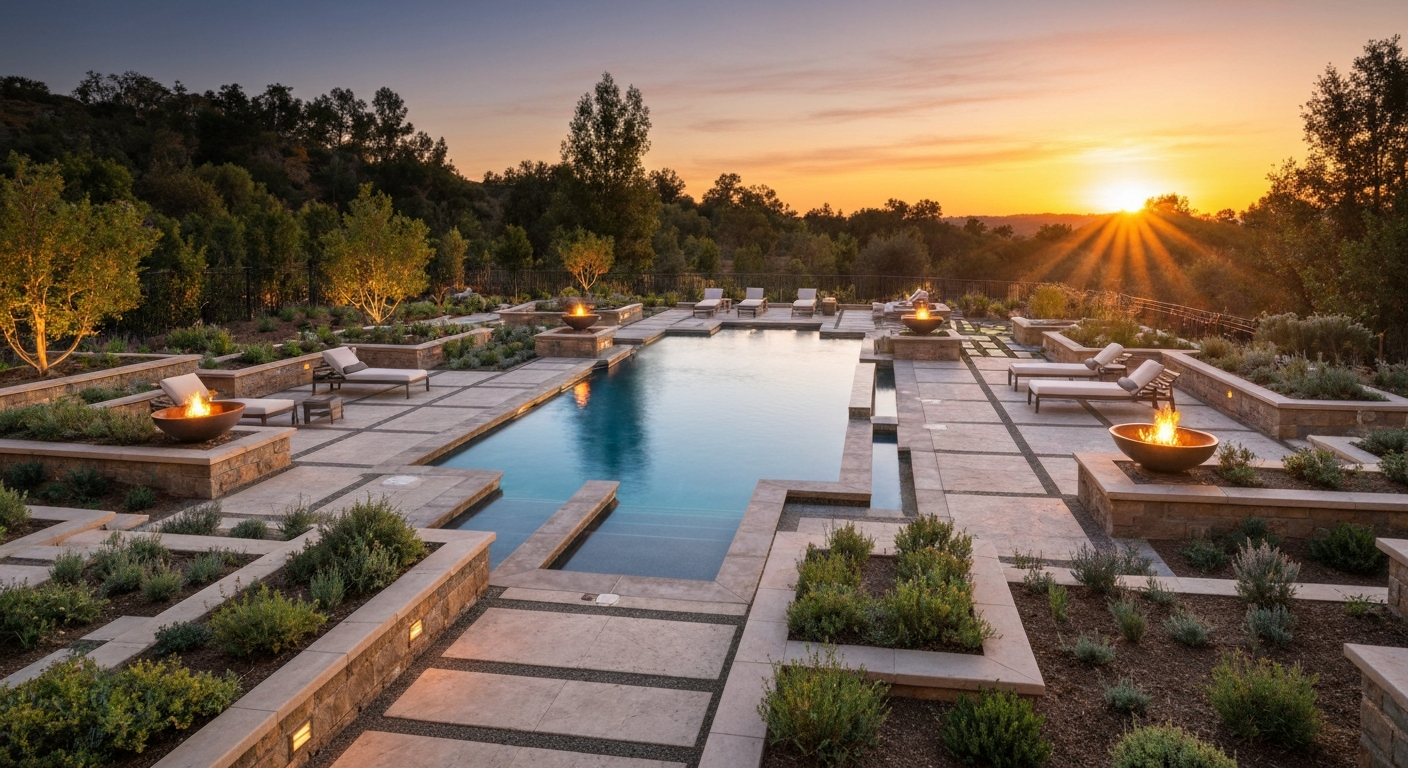
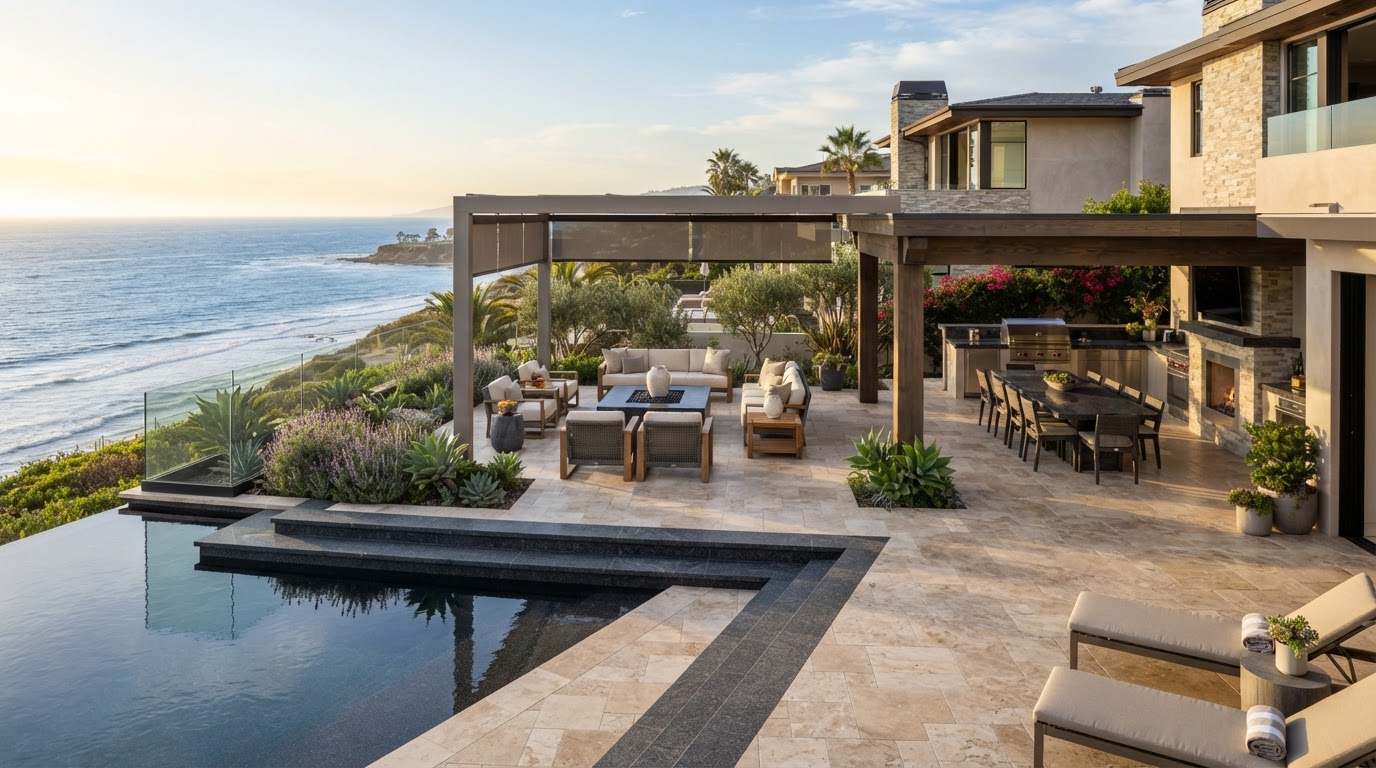
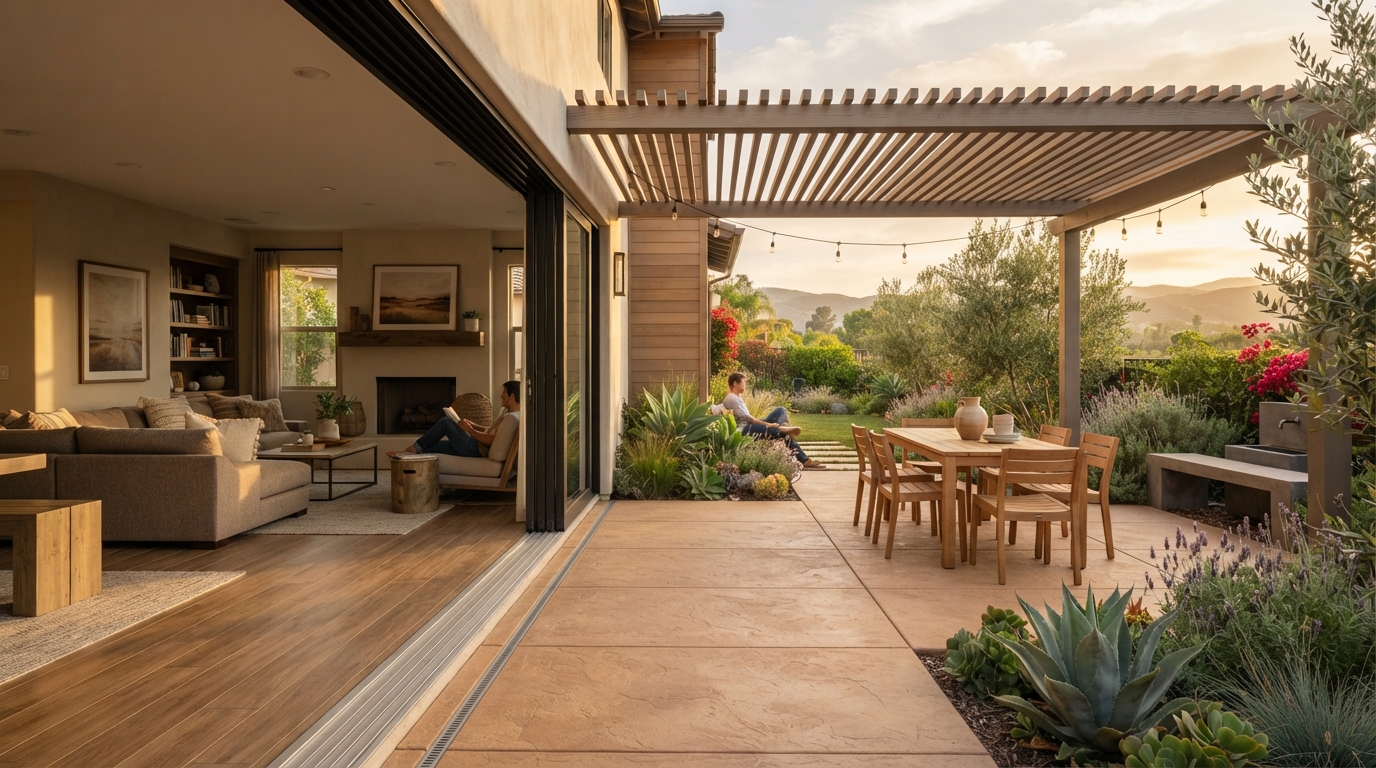
A pool deck works best when it is planned alongside the surrounding outdoor space rather than selected in isolation. Depending on the project, coordination may involve patios, outdoor kitchens, walkways, shade structures, landscape lighting, planting, lawn or groundcover, and other hardscape.
Using complementary materials and planning transitions between zones can help the pool area feel connected to the rest of the backyard. A landscape master plan can coordinate pool decking, patios, drainage, utilities, and planting together.
What should Ventura County homeowners evaluate?
Some Ventura County properties experience strong sun exposure that can raise pool-deck surface temperatures significantly. Material color and finish can influence how comfortable the surface feels during peak afternoon hours. Depending on the property, sloped or hillside lots may require additional drainage, grading, or retaining considerations.
Existing patios, hardscape, shade from trees or structures, and irrigation can all affect how a pool deck performs and ages. HOA requirements may apply in some communities, and city or county requirements vary by jurisdiction. Homeowners should confirm applicable requirements with their city or Ventura County before beginning work.
For homeowners in Camarillo, Thousand Oaks, and surrounding communities, the right pool-deck material depends on the individual property and how the pool area connects with the rest of the yard.
Frequently asked questions
What is the best material for a pool deck in Southern California?
There is no single best material. Travertine, stamped concrete, and exterior porcelain each have different characteristics. The appropriate choice depends on sun exposure, wet-area traction, maintenance expectations, budget, and how the deck connects with the surrounding outdoor space.
Does travertine stay cool around a pool?
Lighter-colored travertine may feel more comfortable than darker surfaces under similar sun exposure, but no material stays cool under every condition. Surface temperature varies with color, finish, density, sunlight, air temperature, and time of day.
Is stamped concrete slippery when wet?
Surface texture and sealer selection affect traction, but no stamped concrete surface should be described as slip-proof. Anti-slip additives may help but do not eliminate all risk. Manufacturer documentation and professional installation should be reviewed for the specific product.
Can porcelain pavers be used around a pool?
Exterior-rated porcelain pavers designed for wet-area use may be appropriate, but indoor porcelain tile should not be assumed suitable. Product-specific ratings, surface texture, installation requirements, and wet-traction performance should be evaluated before selection.
How often does pool decking need maintenance?
Maintenance varies by material but may include cleaning, sealing, joint attention, stain treatment, and inspection for movement or damage. No pool-deck surface is maintenance-free. Manufacturer recommendations should be reviewed before applying sealers or cleaning products.
Planning a More Cohesive Pool and Outdoor Living Area?
Colima Landscape Inc. can help plan how pool decking, patios, planting and adjacent outdoor spaces work together around your property. Schedule a consultation to discuss your design goals.
Discuss Your Pool Surround Project*This article provides general planning information. Material performance, safety, drainage, permit, and maintenance requirements depend on the property, product, jurisdiction, and proposed work.*