Backyard Drainage Problems in Ventura County: Signs, Causes and Solutions
A puddle after heavy rain does not always mean your yard needs a new drainage system. But water that repeatedly collects in the same place, flows toward the house, washes away soil, or leaves part of the yard unusable deserves a closer look.
The cause may be poor grading, compacted soil, excess irrigation, roof runoff, or a change made during an earlier backyard project. Sometimes several issues contribute to the same wet area. Installing a drain without identifying the source may fail to solve the original problem.
Direct Answer
Recurring backyard drainage problems may be caused by improper grading, concentrated roof runoff, compacted soil, over-irrigation, blocked drains, or water entering from adjoining areas. The appropriate response depends on where the water originates, how it moves through the property, and whether it remains on the surface or saturates the soil.
What are the warning signs of a backyard drainage problem?
Standing water is the most obvious sign, but it is not the only one. Possible warning signs include:
- Water repeatedly collecting in the same location
- Soil remaining soggy after nearby areas have dried
- Water flowing toward the home or another structure
- Erosion, exposed roots, or displaced mulch
- Mud or sediment washing onto patios and walkways
- Plants or lawn declining in persistently wet areas
- Standing water near a retaining wall
- Debris or sediment collecting around drain inlets
- Wet areas appearing during otherwise dry weather
- Runoff arriving from an adjoining slope or property
These observations can have multiple possible causes. The timing can provide a clue. If the area becomes wet when it has not rained, the irrigation system may be involved. A leaking valve, damaged pipe, misdirected sprinkler, or excessive watering could be adding more water than the soil can absorb.
What commonly causes backyard drainage problems?
The source differs from one property to another. Some common possibilities include:
- Low spots or improper surface grading — The ground may direct runoff toward the home or trap water in a depression.
- Concentrated runoff from roofs and downspouts — A roof can direct a large amount of water toward downspouts during a storm. If a downspout releases that water into a small planting bed or beside the house, the area may not handle it well.
- Compacted or slow-draining soil — Foot traffic, construction work, and equipment can compact parts of a yard, reducing how quickly water enters the ground.
- Irrigation leaks or excessive watering — A damaged underground line, leaking valve, or watering schedule that runs longer than the soil can handle.
- Clogged, damaged, or poorly positioned drains — Existing drains may be blocked by debris, settled, or placed away from the actual low point.
- Hardscape additions that changed the original water path — Concrete, pavers, and other finished surfaces change how water moves through a yard.
- Landscape edging or planting areas that trap water — Raised beds, borders, or mounds can unintentionally block natural flow paths.
- Runoff entering from higher areas — Some yards receive runoff from higher ground or a neighboring property.
- Previous landscape or grading changes — Soil settling or earlier work may have altered how water travels.
These conditions do not occur on every Ventura County property. Some homes in Camarillo or Thousand Oaks may have flat lots with good surface flow, while others in Moorpark or Newbury Park may have sloped terrain that concentrates runoff. The cause depends on the individual property.
Symptom and possible-cause reference
The table below pairs common observations with possible causes. These are not diagnoses. A professional evaluation can confirm what is actually happening on a specific property.
| What you observe | Possible causes | What may need checking |
|---|---|---|
| Water beside the home | Downspout discharge, surface grading toward foundation, irrigation leak | Grade slope, downspout extensions, irrigation lines |
| One consistently soggy lawn area | Low spot, compacted soil, over-irrigation, slow drainage | Soil conditions, sprinkler coverage, surface elevation |
| Mud collecting on a patio | Runoff from planting beds, displaced mulch, surface flow across hardscape | Planter edging, patio slope, drainage at patio edge |
| Water near a retaining wall | Blocked drain behind wall, water trapped by wall, grade directing flow toward wall | Weep holes, drain outlets, backfill conditions, wall drainage |
| Wet soil during dry weather | Irrigation leak, leaking valve, excessive watering schedule | Valves, underground lines, controller schedule |
| Erosion along a slope or pathway | Concentrated runoff, lack of ground cover, steep grade without interception | Flow path, slope angle, retaining walls or swale placement |
How can the source of the water be identified?
The visible puddle may not be where the water first entered the yard. Practical observation can help identify the source:
- Observe the yard during or shortly after rainfall when safe to do so
- Note where water first appears and follow the visible direction of surface flow
- Inspect downspout discharge locations
- Check irrigation zones independently by running each zone and watching for wet areas
- Look for low points and blocked drain inlets
- Consider whether recent hardscape or landscape work changed water movement
- Distinguish rainwater from a possible irrigation or plumbing leak
Do not enter flooded or unsafe areas to inspect them.
Which drainage solution may fit which condition?
There is no single drainage system that works for every yard. The following options are common, but they should not be treated as a diagnosis for a specific property.
Grading adjustments
Grading changes the shape or elevation of the ground so surface water moves in a planned direction. This may involve adding, removing, or redistributing soil. The finished grade must work with nearby patios, walls, fences, planting areas, and buildings. Significant grading may be subject to local review or permit requirements.
Catch basins and surface drains
A catch basin collects water at the surface and connects to drainage piping. It may be considered where water gathers at a low point near a lawn, patio, walkway, or planting area. A basin placed away from the actual low point may leave much of the original puddle in place.
Channel drains
A channel drain collects water along a narrow line rather than at one small point. These drains are often considered near patios, driveways, pool decks, walkways, and doorways where runoff crosses a finished surface. The connected piping and outlet also need to suit the site.
French drains
A French drain generally uses perforated pipe and drainage rock to collect water within wet soil. It may be considered when subsurface water contributes to a soggy area. It is not automatically the right choice for water flowing over a paved surface or for a leaking irrigation line. The source of the water should be identified before deciding whether this type of system fits.
Swales
A swale is a shallow graded area intended to guide surface water. Depending on the design, it may use soil, grass, planting, or stone. A swale needs an appropriate path and destination. It should not redirect a problem toward a building, neighboring property, or unsuitable outlet.
Dry creek beds
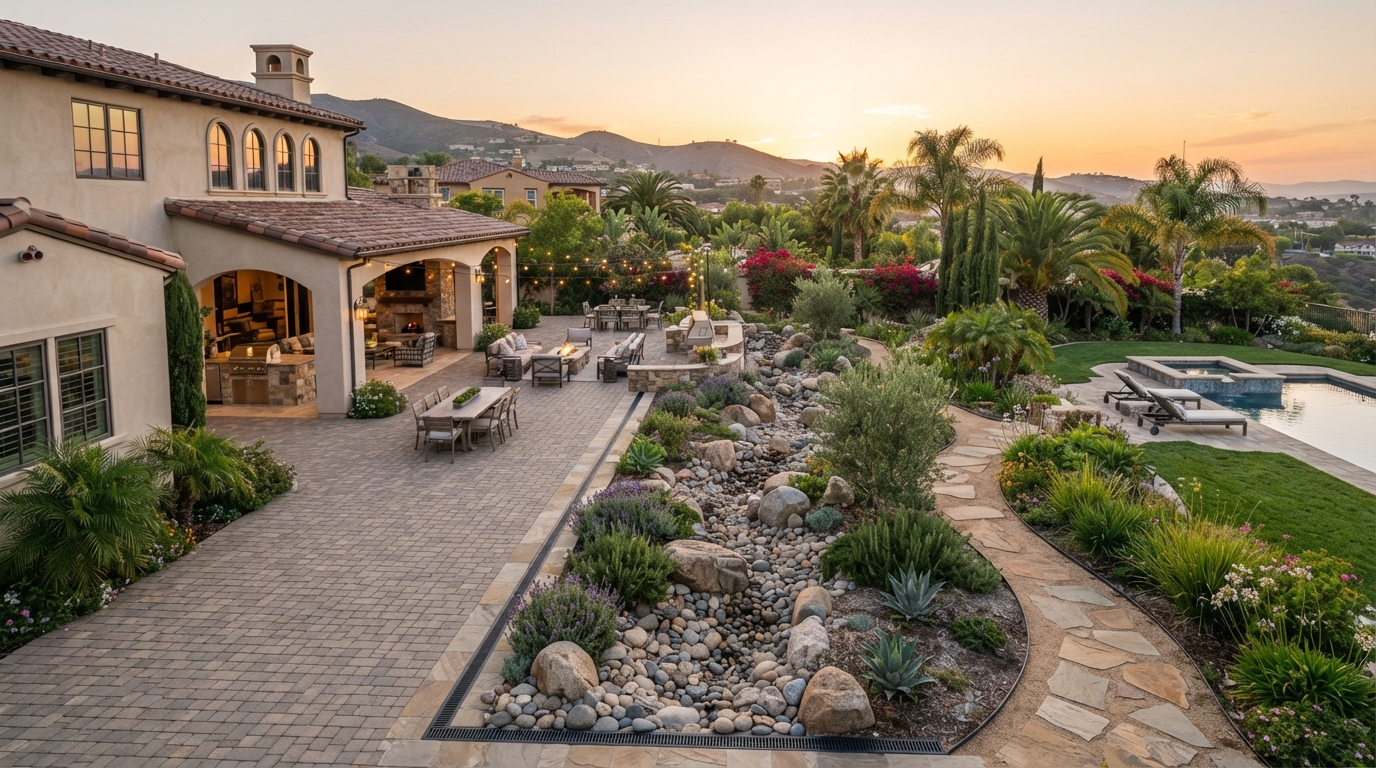
A dry creek bed may provide a visible route for occasional surface runoff while becoming part of the yard's design. Rock placed over an area does not control water by itself. The grade beneath the creek bed must support the intended path, and the water still needs a suitable destination.
Downspout drainage
Some properties may benefit from carrying roof runoff farther from the home. The right approach depends on the roof drainage, ground slope, soil, existing pipes, and available outlet.
Permeable surfaces
A permeable paving system is designed to allow water to enter through openings in the surface and move into a prepared base below. The pavers alone do not make a surface permeable. The excavation, base materials, soil, overflow plan, and installation method all affect performance.
Irrigation corrections
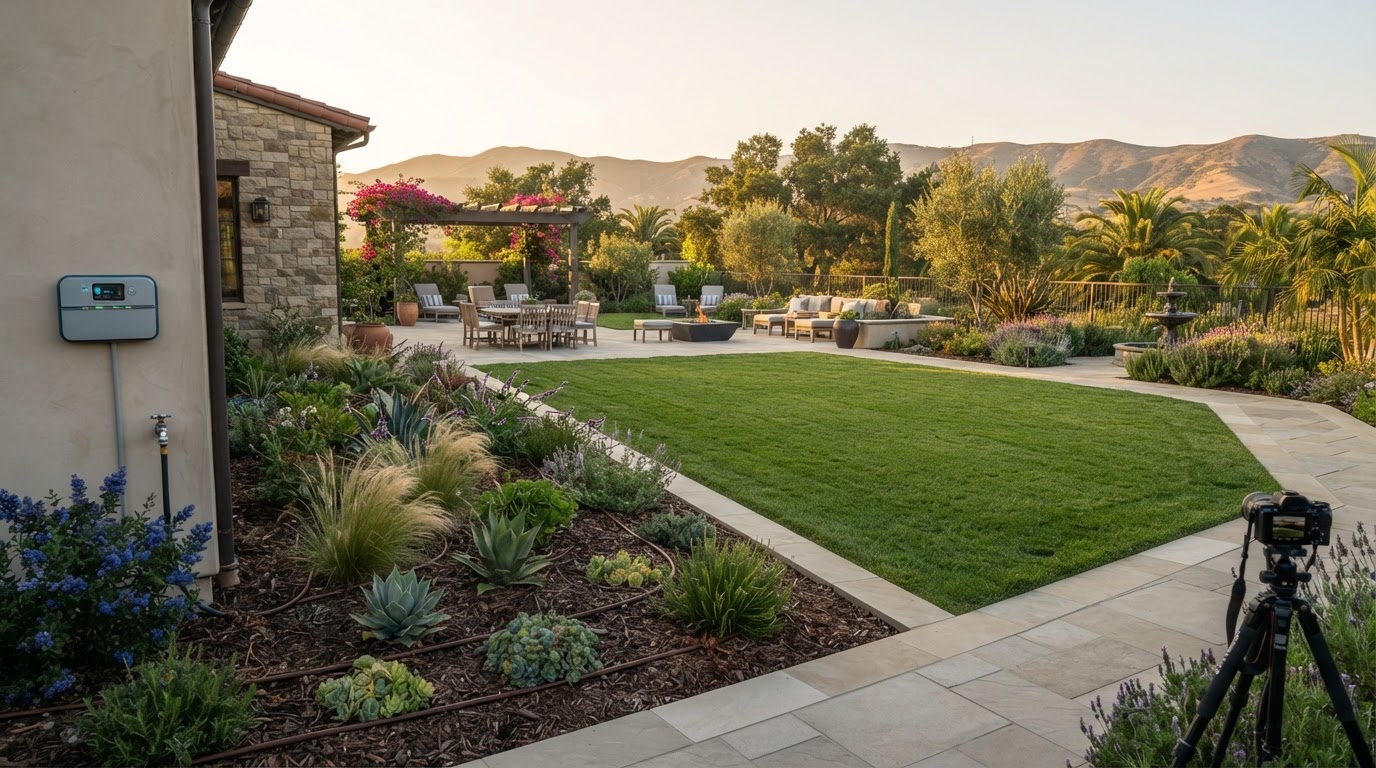
A leaking valve, damaged line, misdirected sprinkler, or excessive watering schedule can produce the same soggy result as a grading problem. Checking the irrigation system may reveal a simpler issue that should be corrected before a new drainage system is considered.
Surface drain vs. French drain
- Surface drains collect visible water at or near the surface. They are useful when water pools in a low area after rain or irrigation.
- French drains are intended to intercept or collect subsurface water in suitable conditions. They may help when the soil remains saturated even when no surface water is visible.
Site grading, soil type, outlet location, and the actual water source all affect the decision. A surface drain installed where the problem is subsurface, or a French drain installed where the problem is surface flow, may not resolve the issue.
When might a simpler correction be enough?
Not every wet area requires a new drainage system. A blocked drain inlet, a downspout discharging into an unsuitable location, or a small landscape feature trapping water may have straightforward fixes. However, these observations do not replace a professional evaluation when water is recurring, extensive, or affecting structures.
When should another qualified professional be involved?
Colima Landscape Inc. may evaluate how drainage relates to the landscape, grading, irrigation, and hardscape plan. However, some situations may require another qualified professional, including:
- Water entering a building
- Suspected plumbing or sewer leaks
- Foundation or structural concerns
- Retaining-wall movement
- Significant slope instability
- Neighbor-to-neighbor runoff disputes
- Engineered drainage calculations
- Work involving public drainage systems or rights-of-way
- Permit questions outside the landscape contractor's role
Colima does not provide engineering, plumbing, legal, or structural services unless such services are separately verified and included in the written scope.
Ventura County drainage and permitting considerations
Drainage, grading, and stormwater requirements can depend on the project scope and the authority governing the property. Before redirecting runoff, substantially changing grades, or connecting to a drainage system, homeowners should confirm applicable requirements with their city or Ventura County and consult the appropriate qualified professional.
Requirements may differ in Camarillo, Ventura, Oxnard, Moorpark, Thousand Oaks, and other local jurisdictions. A general article cannot determine whether a particular drainage project requires a permit. Homeowners should check with the city or county responsible for their address before changing the property's grade or drainage pattern.
Frequently asked questions
Why does my backyard hold water after rain?
Common causes include a low spot, improper grading, compacted soil, concentrated roof runoff, or a blocked drain. The cause depends on the property and should be evaluated before choosing a solution.
Does standing water mean I need a French drain?
Not necessarily. A French drain addresses subsurface water in suitable conditions. If the problem is surface flow, a catch basin, swale, or grading adjustment may be more appropriate. The water source should be identified first.
Can a landscape contractor help with backyard drainage?
A landscape contractor can evaluate how drainage relates to grading, hardscape, irrigation, and planting. Some situations involving plumbing, structural, or engineering concerns may require another qualified professional.
Can patios or other hardscaping change how water moves through a yard?
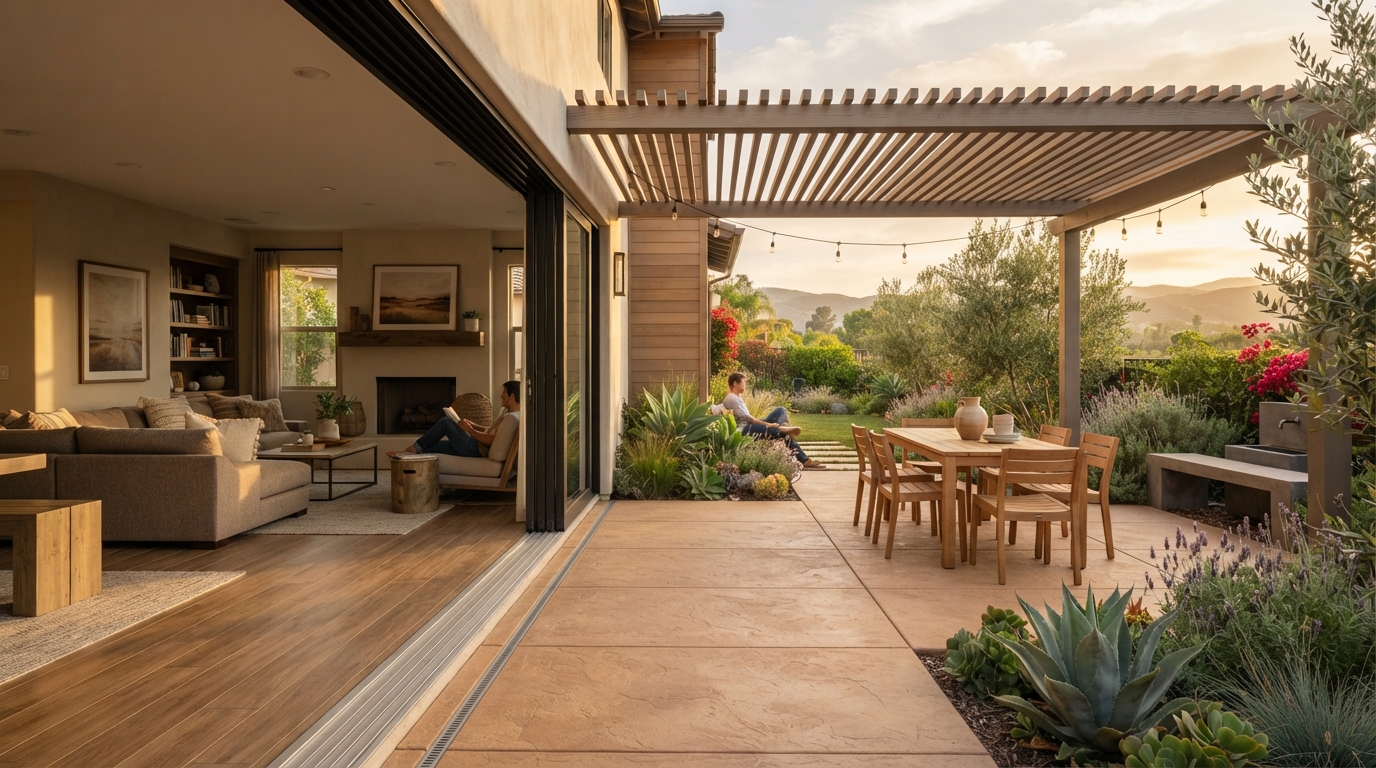
Yes. Adding concrete, pavers, or other finished surfaces changes how water travels. Slope and runoff should be considered when a patio or walkway is designed, not treated as an afterthought.
How can I tell whether water is coming from rain or irrigation?
If the area becomes wet when it has not rained, check the irrigation system. Run each zone independently and watch for wet areas. A leaking valve, damaged pipe, or excessive schedule may be the source.
Can drainage water be directed toward the street?
Requirements depend on the location, project, and governing authority. Some jurisdictions restrict or regulate discharge to the street or storm-drain system. Homeowners should confirm applicable rules before redirecting runoff.
Do backyard drainage improvements require a permit?
Requirements depend on the jurisdiction, property, and scope of work. Grading, drainage connections, retaining walls, or work in a public right-of-way may require permits or inspections. Homeowners should check with the responsible city or county before construction begins.
Concerned About Water Collecting in Your Yard?
Colima Landscape Inc. can evaluate how drainage relates to your grading, hardscaping, irrigation, and overall landscape plan. Schedule a consultation to discuss the property and possible next steps.
Discuss Your Backyard Drainage Problem*This article provides general planning information. Drainage, grading, engineering, stormwater, and permit requirements depend on the property, jurisdiction, and proposed work.*