Drought-Tolerant Landscaping That Doesn't Look Like a Desert
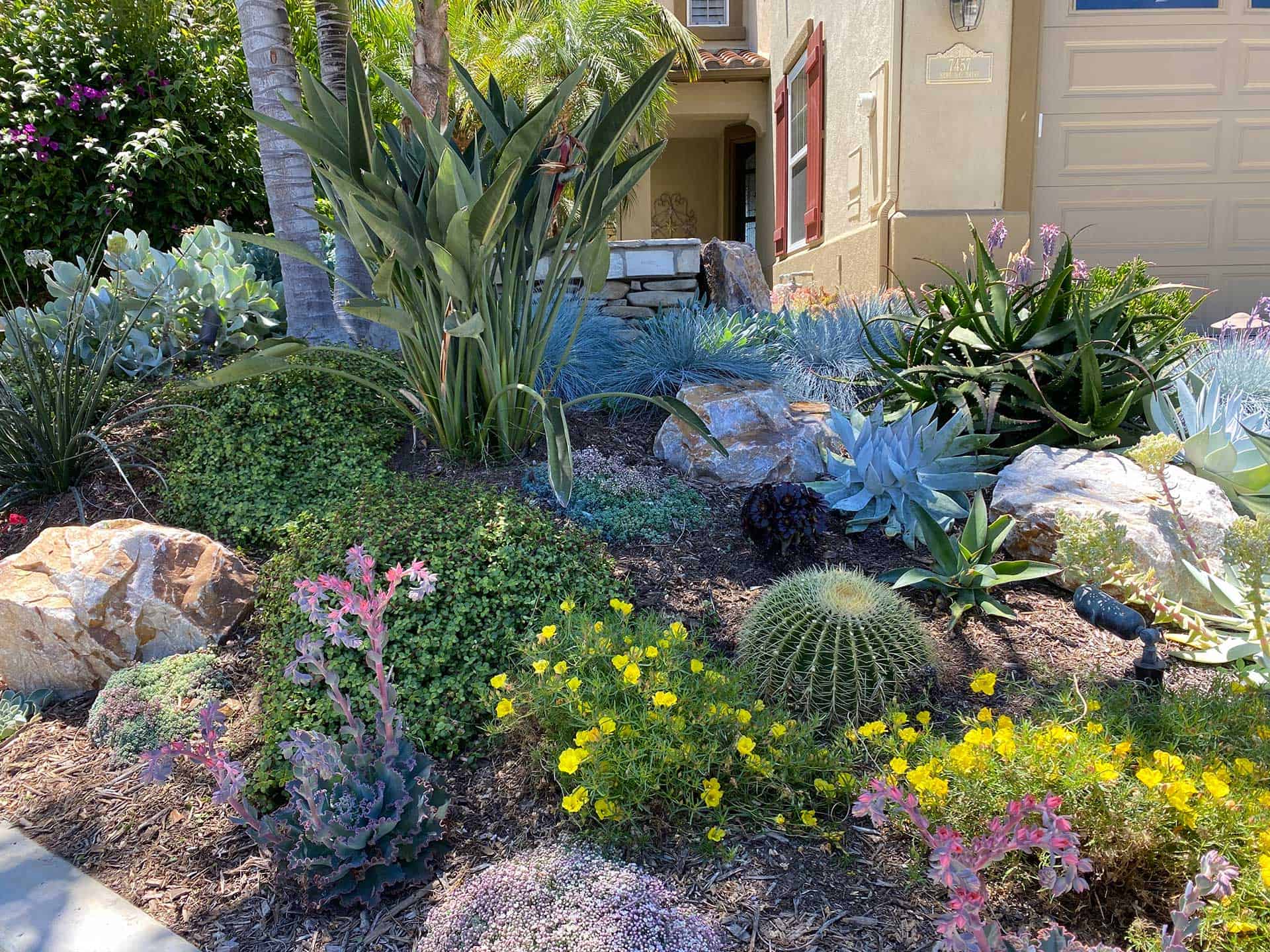
A water-wise landscape does not have to look barren. With thoughtful plant selection, layered heights, contrasting foliage, efficient irrigation, mulch and well-planned outdoor living areas, a drought-tolerant yard can feel full, green and inviting.
There is no single formula. The right approach depends on the property, how the space will be used, sun and shade exposure, soil, slope and the homeowner's maintenance preferences. Drought-tolerant design is about composition, not simply replacing plants with gravel or artificial turf.
Key Takeaways: Designing a Lush, Water-Wise Landscape
- Water-wise does not have to mean barren.
- Group plants with similar water needs (hydrozoning).
- Efficient irrigation matters alongside plant selection.
- Keep lawn where it serves a useful purpose rather than automatically eliminating it.
- Artificial turf is an option, not a requirement.
- Hardscape, drainage and planting should be planned together.
- Verify whether MWELO or local requirements apply to the project.
Can drought-tolerant landscaping still look lush?
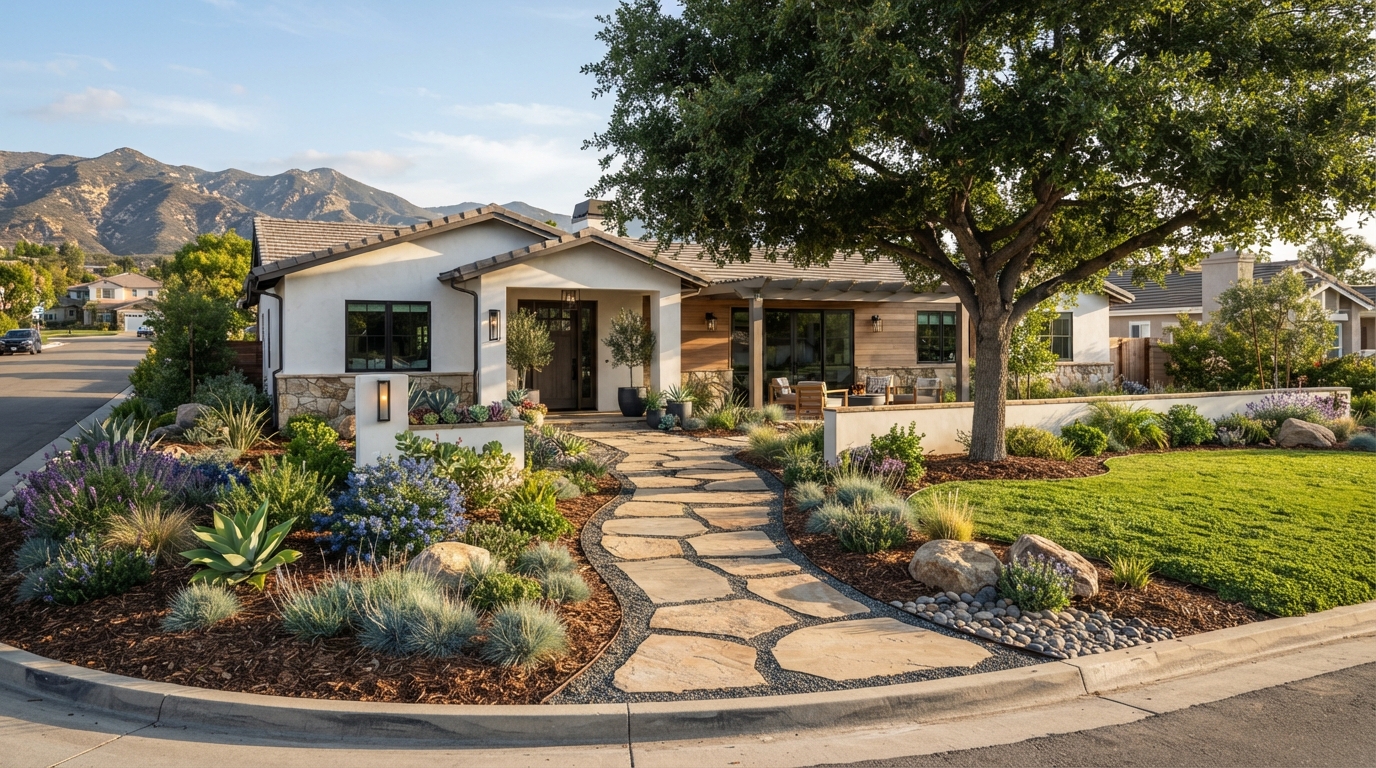
Yes. A water-wise landscape can still look full and inviting. Layered plant heights, repeated groupings, contrasting foliage textures, seasonal color, shade trees, groundcovers and mulch can create visual richness without relying on a conventional high-water landscape. The key is cohesive design rather than scattering drought-tolerant plants across bare ground.
"Lush" does not have to mean high water use. A well-composed planting plan can provide structure, movement and color while using substantially less irrigation than an unused lawn.
What makes a water-wise landscape feel full instead of barren?
A landscape feels full when it has structure, layering and repetition rather than isolated plants surrounded by bare ground. Design choices that create that feeling include:
- Layered plant heights: Trees, shrubs, perennials and groundcovers used together to create depth.
- Contrasting foliage: Different leaf sizes, colors and textures add visual interest.
- Repeated plant groupings: Massing the same plant in drifts creates rhythm and cohesion.
- Evergreen structure: Plants that hold form year-round provide a backbone.
- Seasonal color: Flowering shrubs and perennials add changing interest.
- Groundcovers and mulch: Covering bare soil reduces the barren look and helps retain moisture.
- Shade trees: Trees add vertical scale and cool the surrounding space.
- Pathways and gathering areas: Stone, pavers and defined seating areas connect planting to usable space.
The goal is thoughtful landscape composition, not simply replacing plants with rock or concrete.
Which plants work well in a water-wise Ventura County landscape?
Plant selection should be site-specific. A plant that thrives in a coastal Ventura location may struggle in a hot, inland Simi Valley yard. Suitability depends on species, cultivar, sun and shade exposure, soil, establishment, irrigation, mature size and site conditions.
Homeowners can use WUCOLS (Water Use Classification of Landscape Species), a University of California resource that rates landscape plants by water needs in different California climate regions. It helps compare individual plants rather than assuming anything labeled "Mediterranean," "native" or "succulent" automatically works everywhere.
Potential options may include appropriate species or cultivars of California native plants, Mediterranean-climate plants, ornamental grasses, flowering shrubs, groundcovers, trees, lavender, rosemary, agave or aloe. However, not every plant in a broad category or genus has the same water needs. Evaluate individual plants for the specific location.
What is hydrozoning and why does it matter?
Hydrozoning means grouping plants with similar water needs together so irrigation can be matched to those plants. Instead of mixing plants that need substantially different amounts of water on the same irrigation zone, plants with similar requirements are placed in the same zone.
This makes it easier to water each part of the landscape appropriately. A zone of low-water shrubs can run on a different schedule than a zone with higher-water flowering plants, reducing waste and helping each group receive what it actually needs.
How does irrigation affect landscape water use?
Choosing lower-water plants does not automatically make a landscape water-efficient. A landscape can still waste water if irrigation runs longer than needed, plants with very different water requirements share the same zone, water runs onto sidewalks or hardscape, equipment is damaged or poorly adjusted, or the schedule does not account for seasonal or weather changes.
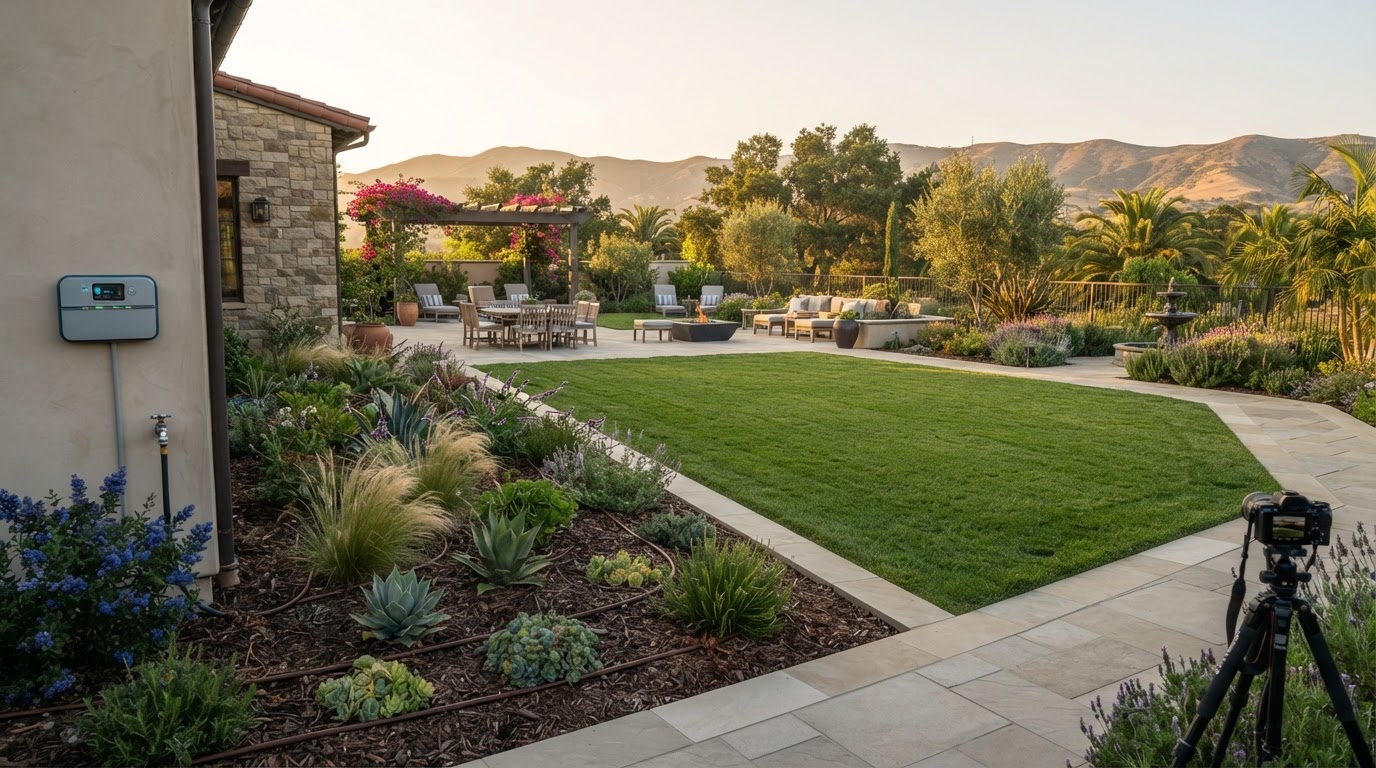
Thoughtful irrigation planning and maintenance matter. Drip irrigation, efficient delivery, weather-based or smart controllers, proper scheduling, hydrozoned irrigation zones and routine inspection for leaks, overspray or poor coverage can all help. No single technology automatically makes a property water-efficient; the system needs to be designed, zoned and maintained for the actual planting plan.
Does mulch help conserve water?
Mulch can help reduce moisture loss from soil by limiting evaporation, and it also contributes visually to a finished planting design. It is one component of landscape water management, not a complete solution on its own.
The appropriate mulch material and depth depend on the plant type, site conditions and applicable fire-safety considerations. Organic mulches break down over time and may need replenishing. Homeowners should follow supplier guidance and consider local conditions rather than applying a universal depth.
How should hardscape fit into a water-wise landscape?
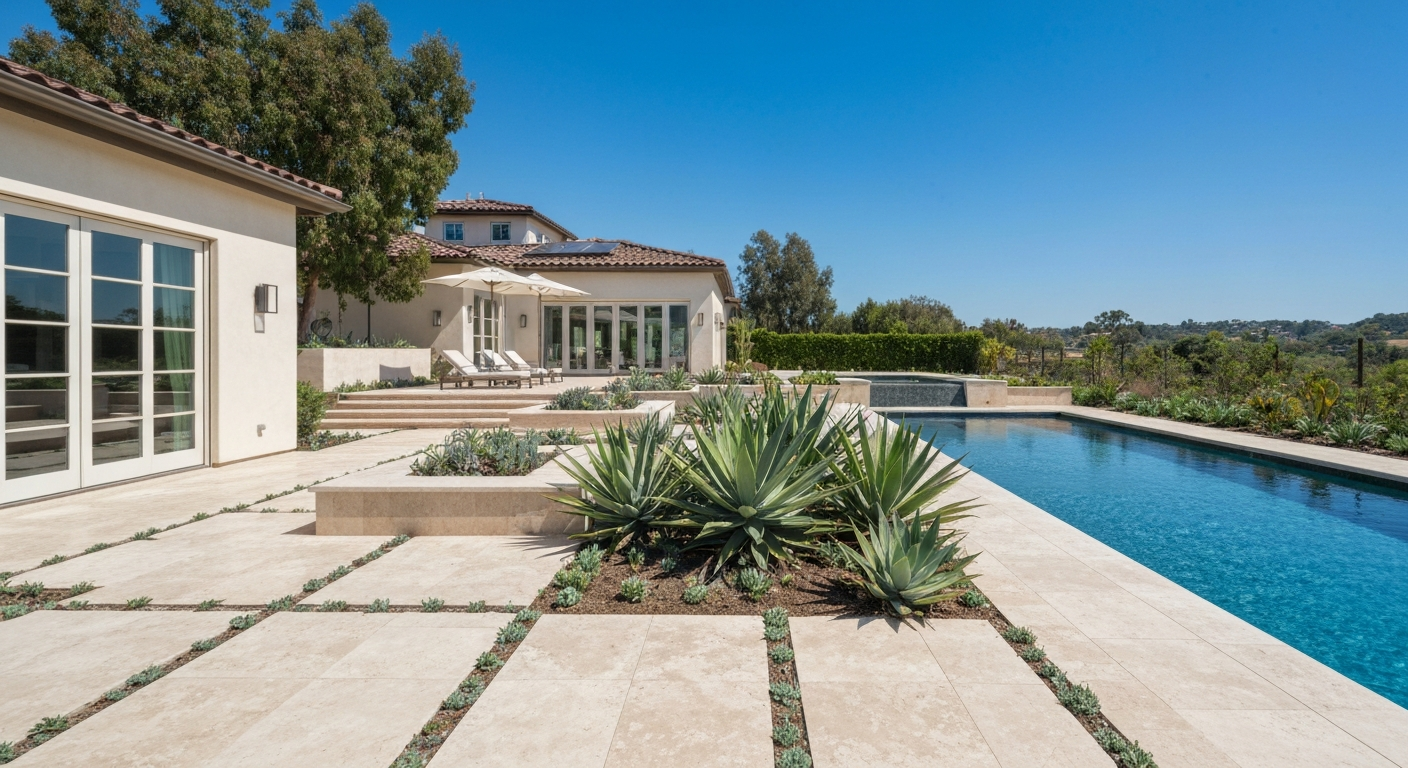
Patios, pathways and other non-irrigated outdoor areas can be part of a water-wise design, but their size, location, drainage, runoff and relationship to planting areas should be considered as part of the overall site. More hardscape is not automatically better.
Large hardscape areas can affect drainage, increase surface temperature and change how water moves through the property. Where appropriate, permeable surfaces, drainage paths and planting areas that absorb runoff can help balance usable space with water management. Hardscape and planting work best when planned together rather than treating paving as a substitute for landscape design.
Does drought-tolerant landscaping mean giving up your lawn?
Not necessarily. A useful question is: how much lawn do you actually use? A household may value lawn for children, pets, recreation, entertaining or a particular design purpose. Keeping an appropriately sized functional lawn while reducing or replacing unused lawn can be a practical approach.
Options include keeping a smaller functional turf area, replacing decorative lawn with lower-water planting or groundcovers, or converting part of the yard into outdoor living areas. Living turf is not universally bad; the goal is matching the lawn to actual use.
What about artificial turf?
Artificial turf is one option for homeowners who want a lawn-like surface without routinely irrigating living grass, but it is not required for a water-wise landscape. Planting, groundcovers, mulch, hardscape and appropriately sized living turf areas can also be considered depending on how the space will be used.
Artificial turf does not require the routine irrigation of living turf, but it is not maintenance-free, not always cooler than living grass in direct sun, and not always environmentally preferable. Product selection, drainage, heat exposure, installation and maintenance expectations should all be evaluated. It is an option, not the centerpiece of water-wise design.
What does MWELO mean for homeowners?
Some new or rehabilitated landscapes may be subject to California's Model Water Efficient Landscape Ordinance (MWELO) or an applicable local water-efficient landscape ordinance. Applicability and requirements depend on factors such as the project, landscape area, scope and local jurisdiction, so homeowners should verify the requirements that apply to their particular property and project.
MWELO addresses more than plant choice. It can involve landscape water use, plant selection, irrigation, soil, water budgets and stormwater or site considerations. Drought-tolerant plants alone do not automatically equal MWELO compliance. Homeowners should confirm with their local water agency or the California Department of Water Resources whether and how the ordinance applies.
How do you plan a water-wise landscape for your specific property?
A practical planning checklist:
- How will the yard be used?
- Which areas receive sun or shade?
- Which plants fit the location and what are their expected water needs?
- Can plants with similar needs be grouped (hydrozoned)?
- How will irrigation be zoned?
- Where is lawn actually useful?
- How does water drain through the site?
- Where should patios and pathways go?
- Is mulch appropriate for the planting areas?
- What maintenance will the landscape require?
- Does the project trigger applicable local water-efficiency requirements?
Ventura County properties vary in coastal versus inland influence, sun exposure, temperature, wind, soil, slope, existing vegetation and microclimate. A plant or design strategy appropriate for one property may not be ideal for another. Local UC Cooperative Extension and Master Gardener resources can provide region-specific guidance.
Planning a Water-Wise Outdoor Space?
Colima Landscape Inc. can help you plan a landscape that balances planting, outdoor living areas and water-conscious design around your property and priorities. Schedule a consultation to discuss your space and project goals.
Book Consultation