How to Integrate Smart Irrigation Into Your Estate Master Plan
Irrigation is often treated as something added after the landscape has already been designed. On a larger or higher-value property, that approach can create coverage problems, unnecessary water use, valves buried beneath finished surfaces, damaged hardscape, and expensive changes later.
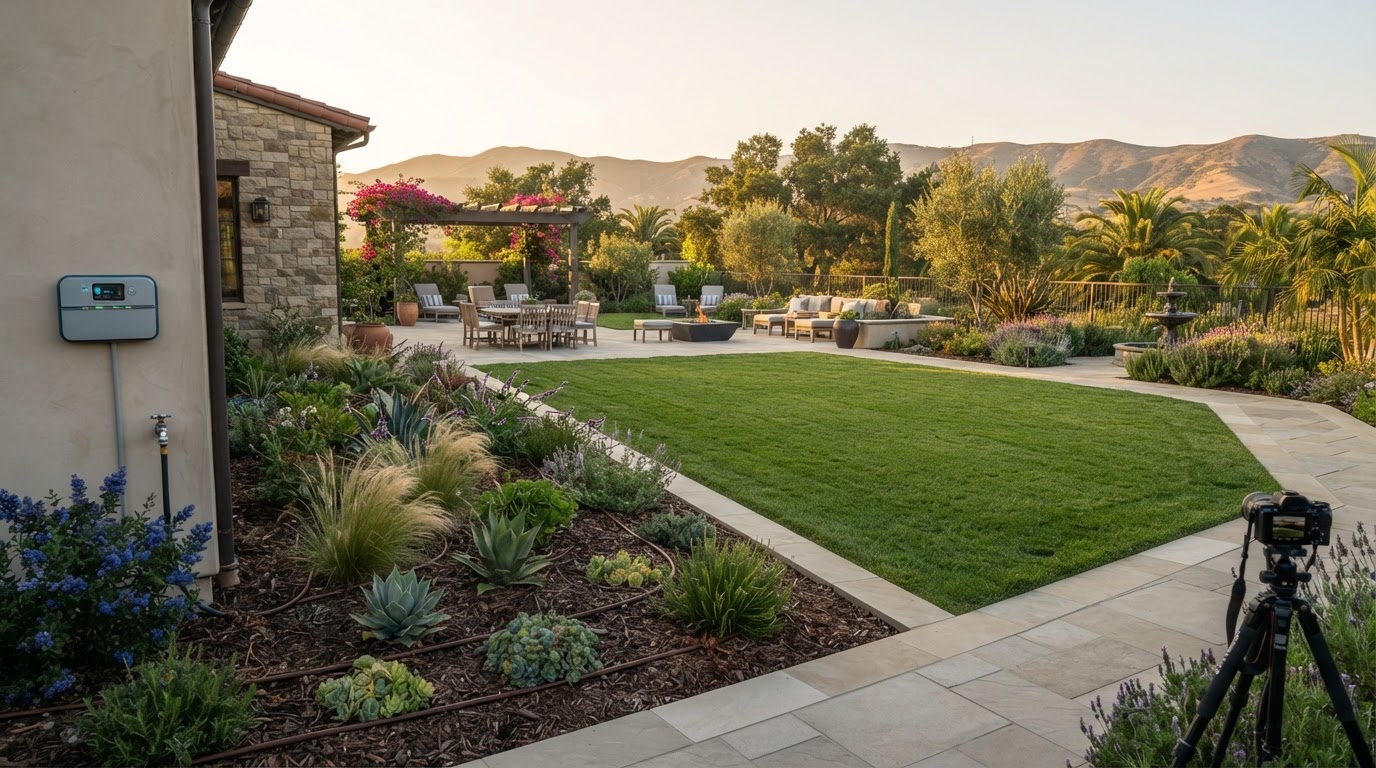
The irrigation plan should be developed at the same time as planting, drainage, hardscape, lighting, pools, and outdoor living areas. A smart controller is useful, but a controller alone does not make an irrigation system truly smart. The piping, zones, pressure, emitters, and layout all need to work together before any programming can deliver real efficiency.
Key Takeaways: Smart Irrigation in an Estate Master Plan
- Irrigation should be planned during the landscape master-planning stage, not added after hardscape and planting are complete.
- Hydrozoning groups plants with similar water needs so each part of the landscape receives the right amount of water.
- A smart controller is one component. Zone design, pressure regulation, flow monitoring, and maintenance matter equally.
- Sleeves installed beneath future hardscape can prevent finished surfaces from being cut or disturbed later.
- Actual water savings depend on the existing system, landscape design, plant material, programming, weather, and maintenance.
- MWELO compliance involves more than selecting a smart controller. Homeowners should verify applicable requirements with their local agency.
Why irrigation planning should begin early
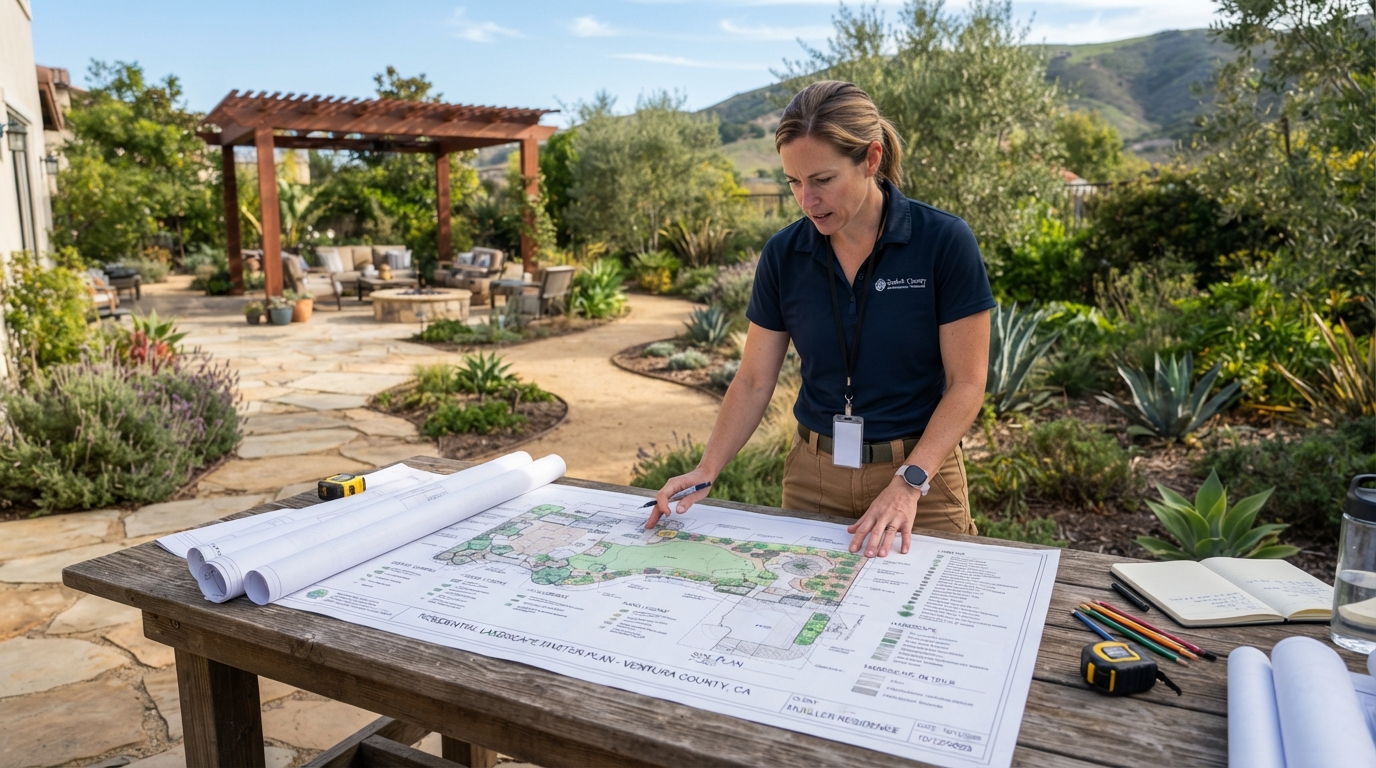
When irrigation is designed during the landscape master-planning stage, it can be coordinated with every other element of the property. Patios and walkways, driveways, outdoor kitchens, retaining walls, pools and spas, landscape lighting, drainage systems, planting areas, and mature trees all affect where irrigation can run and how it should be accessed.
One practical reason to plan early is the use of irrigation sleeves or conduits installed beneath future hardscape before concrete, pavers, or masonry are completed. A sleeve installed during construction allows irrigation lines to pass beneath a patio or driveway without cutting the finished surface later. If irrigation is added after the hardscape is poured or laid, the options are far more limited and often more expensive.
Early planning also helps identify where valves, controllers, and shutoffs should be located so they remain accessible for inspection, programming, and repair. A valve buried beneath a planted area that later fills in with mature shrubs is difficult to find and service. A valve box placed in a logical, accessible location from the beginning avoids that problem.
Start with hydrozones, not sprinkler locations
Before deciding where sprinkler heads or drip lines go, the planting plan should be organized into hydrozones. Hydrozoning means grouping plants with similar water needs together and irrigating them on the same zone. This allows each part of the landscape to receive the appropriate amount of water without overwatering one area to satisfy another.
Separate irrigation zones may be needed for:
- Lawns
- Drought-tolerant planting
- Shrubs
- Mature trees
- Newly installed trees
- Raised planters and containers
- Slopes
- Vegetable or herb gardens
- Shaded areas
- Sunny and wind-exposed areas
A mature oak and a newly planted shrub have very different water requirements. If they share the same zone, one will likely receive too much or too little. Grouping plants by water need improves plant health and reduces waste.
Smart controllers versus a complete smart irrigation system
Weather-based and soil-moisture-based controllers can adjust watering schedules automatically, but their effectiveness depends on the condition and design of the rest of the system. A controller cannot fix poorly designed zones, undersized pipe, mismatched emitters, or inadequate pressure.
A complete smart irrigation system may also involve:
- Correctly designed irrigation zones matched to plant water needs
- Appropriate emitters or sprinkler heads for each application
- Pressure regulation to prevent misting and uneven distribution
- Proper scheduling adjusted for seasons and weather
- Flow monitoring to identify abnormal water use
- A master valve to stop flow when the system is off
- Leak detection and automatic shutoff capabilities
- Regular inspection and maintenance
Weather-based controllers use local or on-site weather data to estimate how much water the landscape needs and adjust the schedule accordingly. Soil-moisture sensors measure actual moisture in the ground and trigger watering only when needed. Neither option is universally better. The appropriate choice depends on the property, planting, soil, microclimates, and system design. The U.S. Environmental Protection Agency WaterSense program labels controllers that meet efficiency criteria, but a labeled controller still requires proper zone design and maintenance to perform well.
Choosing the right watering method
Different irrigation methods suit different applications:
- Dripline or individual emitters for many planting beds, delivering water directly to the root zone with minimal evaporation
- Bubblers or specialized irrigation for certain trees, especially during establishment
- Rotors or spray equipment for lawn areas when appropriate for the shape and size of the turf
- High-efficiency nozzles where spray heads are used but improved distribution is needed
- Separate irrigation strategies for containers and raised planters, which dry out differently than in-ground planting
Drip irrigation is not always the best solution. Every method must be designed, installed, and maintained correctly to perform as intended. A poorly designed drip system can underwater established plants just as a poorly adjusted spray head can waste water through overspray.
Tree watering deserves particular attention. A small emitter placed beside the trunk does not serve a mature tree well, because the active root zone extends well beyond the trunk. Irrigation for trees should account for the root zone and the tree's maturity, and it may need to be adjusted as the tree grows.
Pressure, flow, and leak protection
Water pressure and available flow should be evaluated before the system is finalized. On large properties, sloped lots, properties with long pipe runs, estates with multiple structures, and landscapes with several irrigation zones, pressure and flow can vary significantly from one end of the property to the other.
Pressure regulation, properly sized components, flow sensors, and master valves may help the system operate more consistently and identify abnormal water use. Flow monitoring can alert the controller to a possible leak or broken line, but technology cannot detect every leak or prevent all water damage. Regular inspection remains necessary.
Irrigation for slopes and large estate properties
Larger and sloped properties present challenges that a flat residential lot may not. Runoff, uneven pressure, water moving downhill, low-head drainage, wind drift, erosion, different sun exposure across the property, soil differences, and watering areas far from the main supply all affect system design.
On slopes, shorter watering cycles with soak periods between them can reduce runoff by giving water time to enter the soil rather than sheeting across the surface. Check valves prevent water from draining out of the lowest heads after the zone shuts off. Equipment selection, spacing, and coordination with drainage and erosion-control planning all matter. A slope that is irrigated the same way as a flat lawn will likely waste water and create runoff.
Coordinating irrigation with drainage
Irrigation and drainage are related but serve different purposes. Irrigation delivers water to plants. Drainage manages excess water from rainfall, runoff, hardscape, slopes, or other sources. Both should be planned together.
A common mistake is assuming that a wet area can be fixed by reducing irrigation. If the property has an underlying grading or runoff problem, turning down the sprinklers will not solve it. The water may be arriving from a downspout, a slope, a neighboring property, or a high water table. Identifying the actual source before choosing a solution prevents wasted effort and money.
Planning for phased estate improvements
An irrigation system can be designed with future work in mind. If the master plan includes a future outdoor kitchen, pool or spa, additional patio, new planting areas, a guest house or accessory structure, a later lawn conversion, or expansion of an entertaining area, the irrigation system can be prepared in advance.
Planning for future phases may involve installing sleeves beneath areas that will later be paved, providing extra capacity in the mainline, leaving accessible valves at logical shutoff points, and designing zones that can be expanded or reconfigured without disturbing finished work. Exact provisions depend on the approved property plan and anticipated construction. Not every future possibility can be accommodated, but the most likely improvements can often be planned for.
Retrofitting an existing property
An existing estate irrigation system can often be upgraded without replacing everything. The process may begin with an evaluation of the existing controller, valves, pipe condition, water pressure, zone layout, sprinkler heads and emitters, leaks, coverage, planting changes, and current scheduling.
Some properties may only need targeted improvements: a new controller, pressure regulation, a few redesigned zones, or conversion of spray heads to drip in selected beds. Others may benefit from a larger redesign if the original system was poorly designed or the planting has changed significantly. Not every existing system needs to be fully replaced.
MWELO and local requirements
California's Model Water Efficient Landscape Ordinance, commonly called MWELO, may apply to certain new construction and rehabilitated landscape projects depending on factors such as the project scope, landscape area, and local requirements. The California Department of Water Resources is the authoritative source for MWELO information.
Compliance can involve more than selecting a smart controller. It may include a calculated water budget, planting design, hydrozoning, irrigation design, soil considerations, documentation, installation requirements, and local review or inspection. A smart irrigation controller does not automatically make a project MWELO-compliant.
Local agencies may adopt and enforce requirements that are at least as effective as the state model. Homeowners should confirm current requirements with their city, county, designer, contractor, or the appropriate local agency before beginning work. This article does not provide legal advice or make definitive claims about whether an individual property is subject to MWELO.
Ventura County planning considerations
Ventura County properties vary in ways that affect irrigation planning. Long, dry summers and seasonal rainfall mean most irrigation demand is concentrated in the same months every year. Hot inland conditions in communities like Moorpark and Simi Valley can drive higher water demand than coastal areas. Properties in Camarillo or Oxnard may experience more coastal influence and cooler temperatures.
Wind exposure, sloped properties, clay or compacted soils, and different microclimates across a large lot all affect how water moves and how much each zone needs. A property in Thousand Oaks or Newbury Park may have different conditions on the front slope than in the backyard. Local watering rules and project requirements may also vary by jurisdiction. The same soil, weather, or regulations do not apply to every property in these communities.
Questions to ask during master planning
When discussing the irrigation plan with a landscape professional, the following questions can help clarify the design:
- Which plants and areas will share irrigation zones?
- Are mature trees being watered separately from shrubs and lawns?
- Has water pressure and flow been evaluated for the property?
- How will irrigation cross beneath patios, walkways, and driveways?
- Is the system prepared for future landscape phases?
- Where will valves, controllers, and shutoffs be located?
- How will leaks or abnormal flow be identified?
- How will slopes and runoff be managed?
- Does the proposed project require MWELO documentation or local approval?
- Who will program and maintain the system after installation?
Irrigation is infrastructure, not an accessory
Effective irrigation is infrastructure. It protects plant health, finished hardscape, and the homeowner's overall landscape investment. When it is planned as part of the master plan rather than added at the end, it works with the planting, drainage, hardscape, and outdoor living areas instead of fighting against them.
If you are planning a complete landscape renovation or estate master plan in Ventura County, Colima Landscape Inc. can help you think through how irrigation fits within the overall property. Schedule a consultation to discuss your site, planting goals, and project scope.
Planning an Estate Landscape Project?
Colima Landscape Inc. can help you coordinate irrigation, planting, hardscape, drainage and outdoor living areas as part of a complete landscape plan. Schedule a consultation to discuss your property and design goals.
Book Consultation