How to Design a High-End Water-Wise Landscape in Southern California
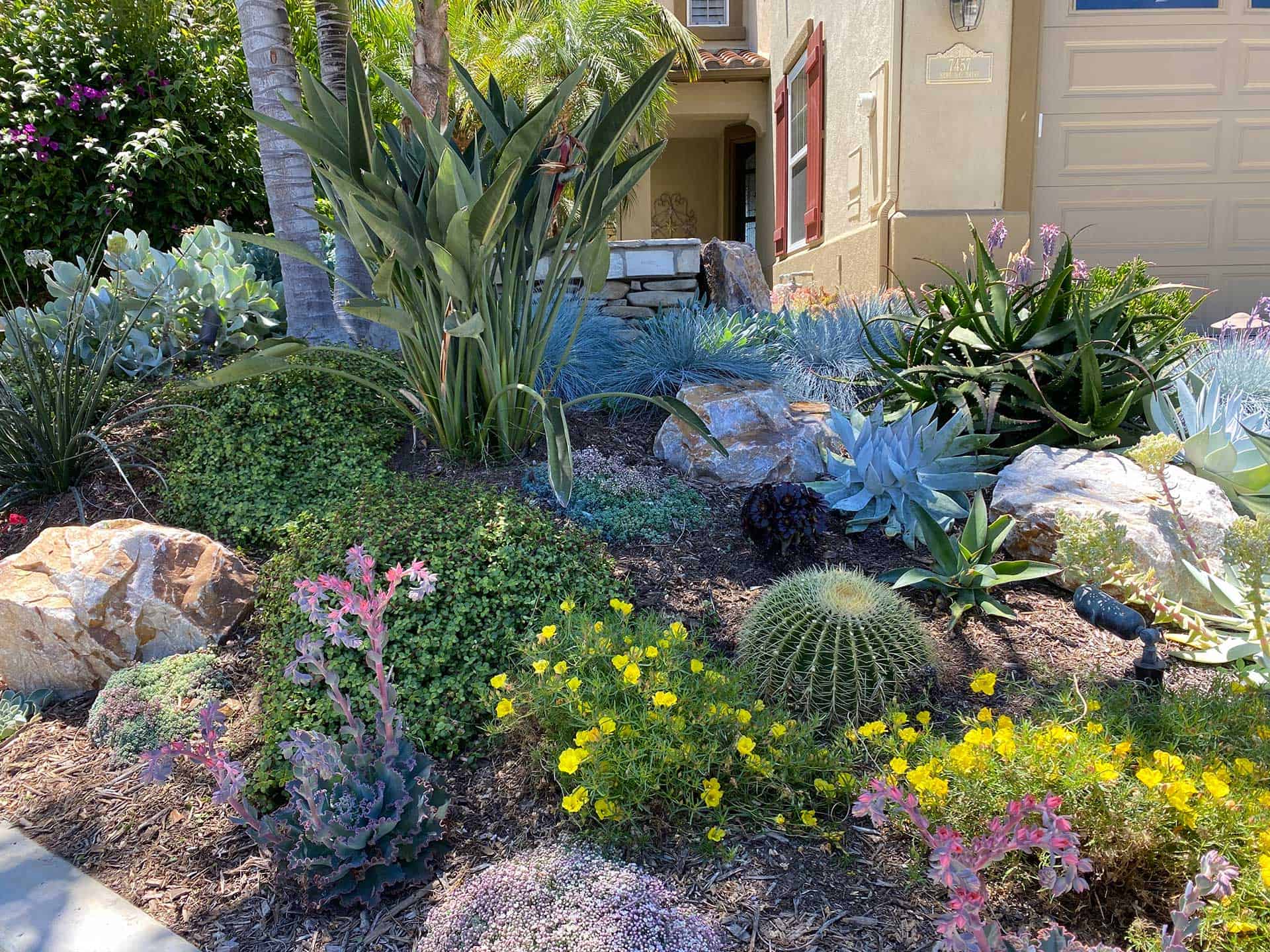
A water-wise landscape does not have to look like a barren gravel lot. With thoughtful planning, a property can feel lush, layered, and high-end while using less water than a conventional lawn-heavy design.
The key is treating the landscape as a coordinated composition rather than a collection of drought-tolerant plants scattered across a yard. Planting, irrigation, shade, hardscape, and outdoor living areas can work together to create a space that is both beautiful and water-conscious.
Direct Answer
Water-wise landscape design considers plant water needs, irrigation efficiency, usable landscape areas, site conditions, and overall design rather than focusing on one particular aesthetic. It does not require removing every plant, filling the yard with gravel, or eliminating all lawn. A high-end water-wise landscape can use proportion, layered planting, shade, texture, and cohesive design to look intentional and feel inviting.
What does water-wise landscaping actually mean?
Water-wise design considers how much water the landscape actually needs and how that water is delivered. Instead of focusing on a single look, it asks how the property will be used, which areas need irrigation, which plants are appropriate for the site, and how water can be delivered efficiently to the areas that need it.
A water-wise landscape may still include lawn, flowering plants, trees, and outdoor living areas. The difference is that each element is selected and sized with water use in mind rather than added without considering the irrigation demand it creates.
Can a water-wise landscape still look lush and high-end?
Yes, when the landscape is designed cohesively. A high-end appearance comes from proportion, layering, repetition, and the relationship between the landscape and the home, not from using the most water-hungry plants available.
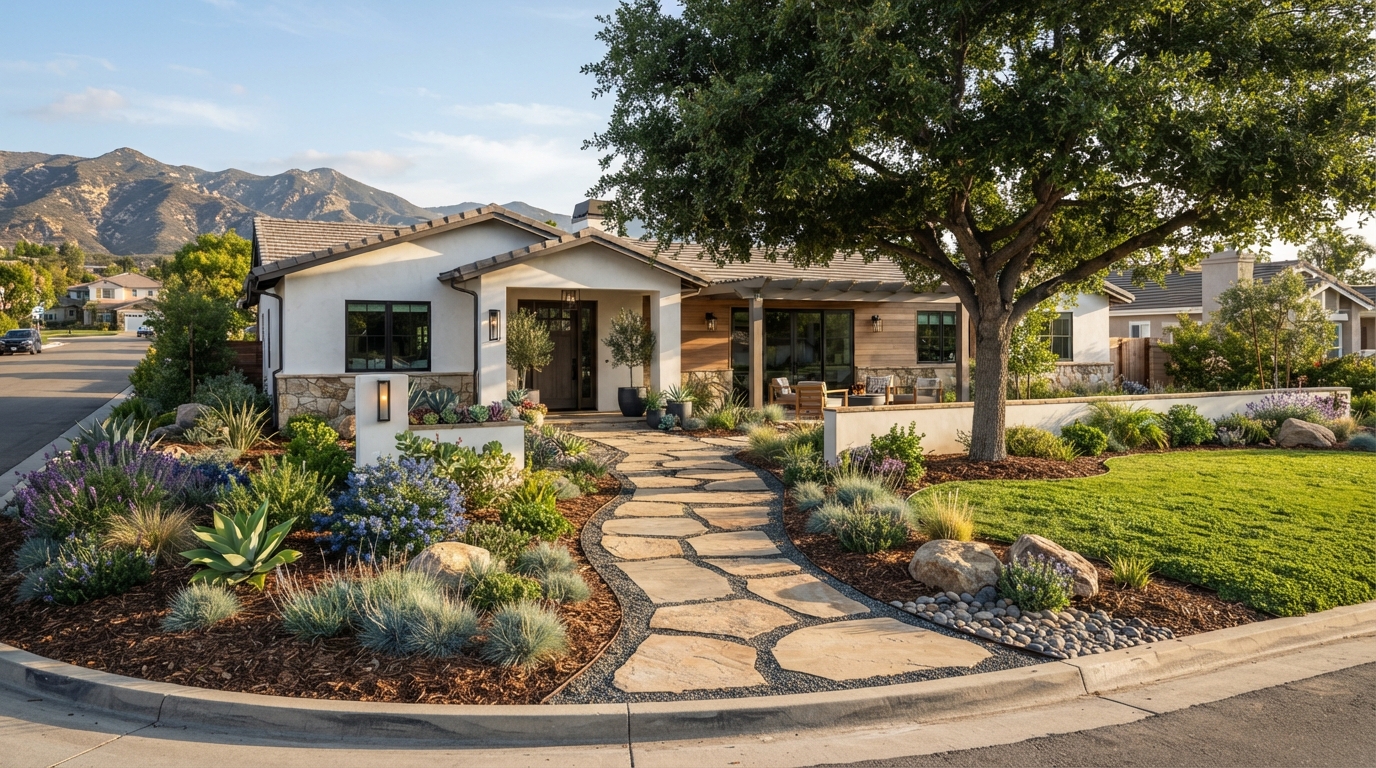
Layered planting, trees for vertical structure, repeated plant palettes, seasonal interest, and defined focal points can create a rich, textured landscape without relying on high-water-use turf. The goal is to make the landscape feel designed, not merely water-efficient.
Which plants belong in a water-wise landscape?
A water-wise landscape is not limited to agaves and aloes. Suitable plants may include California-appropriate species, Mediterranean-climate plants, trees, shrubs, ornamental grasses, groundcovers, and succulents used as accents or structural elements.
An important concept is hydrozoning: grouping plants with similar water needs so each zone can be irrigated appropriately. This makes irrigation more efficient and easier to manage, because a zone of low-water plants is not overwatered to keep one thirsty plant alive. Plant selection should always consider site conditions, sun exposure, soil, and the homeowner's maintenance preferences. See our drought-tolerant landscaping page for more detail.
How does irrigation affect a water-wise landscape?
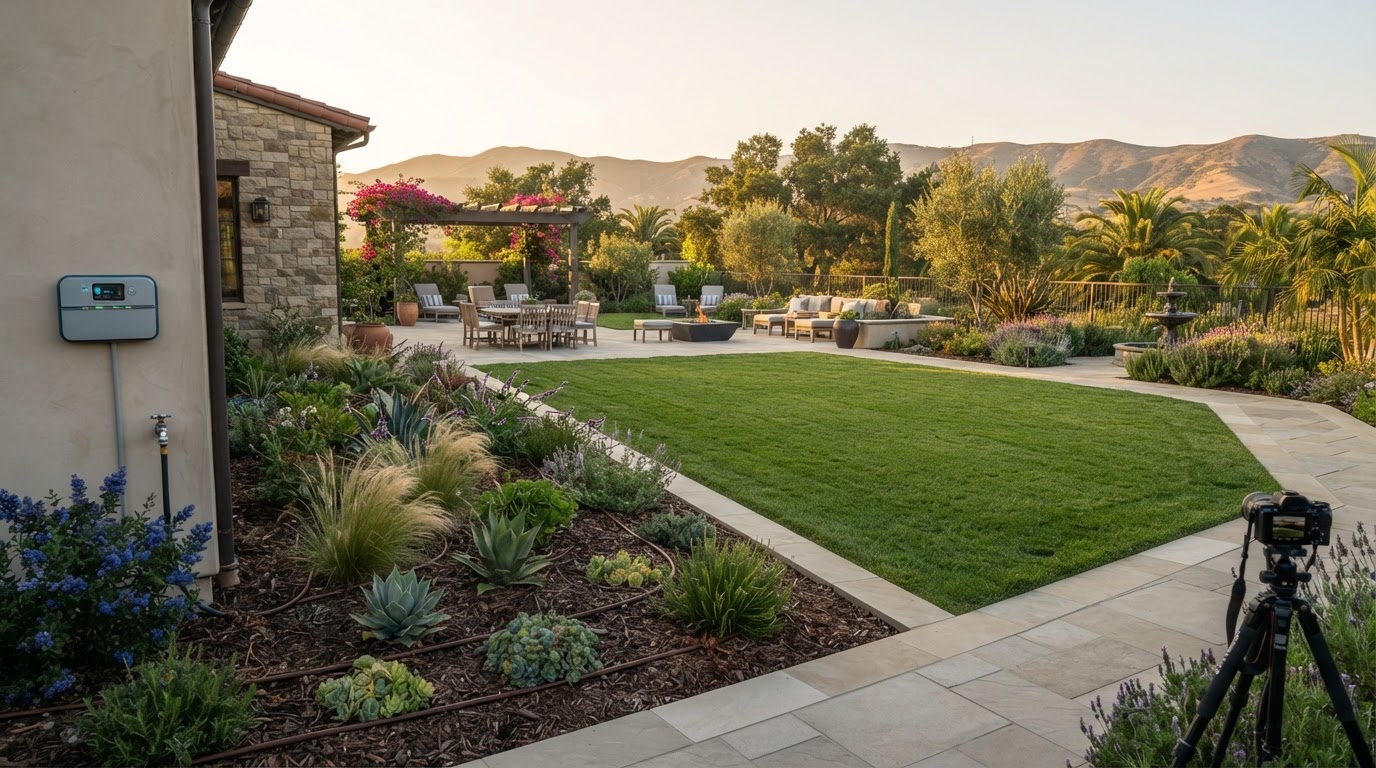
Even a landscape with appropriate plants can waste water if the irrigation system is inefficient. Drip irrigation, where appropriate, can deliver water directly to plant root zones. Weather-based or smart controllers can adjust schedules based on conditions. Proper zoning, regular inspection for leaks or overspray, and appropriate scheduling all contribute to efficiency.
Irrigation should be coordinated with the planting plan, not added as an afterthought. A well-planned irrigation system can reduce unnecessary water use, but actual savings depend on the property, plants, system condition, weather, and maintenance.
Does water-wise landscaping mean removing all the lawn?
Not necessarily. A useful approach is identifying where lawn is actually used and where it serves a purpose, such as a play area or gathering space, versus areas where turf is primarily decorative and could be replaced with lower-water planting or other landscape features.
Reducing lawn area can lower irrigation demand, but eliminating all turf is not required for every property. The decision depends on how the family uses the yard, the available water, and the overall design goals.
How can hardscape reduce irrigation without overwhelming the yard?
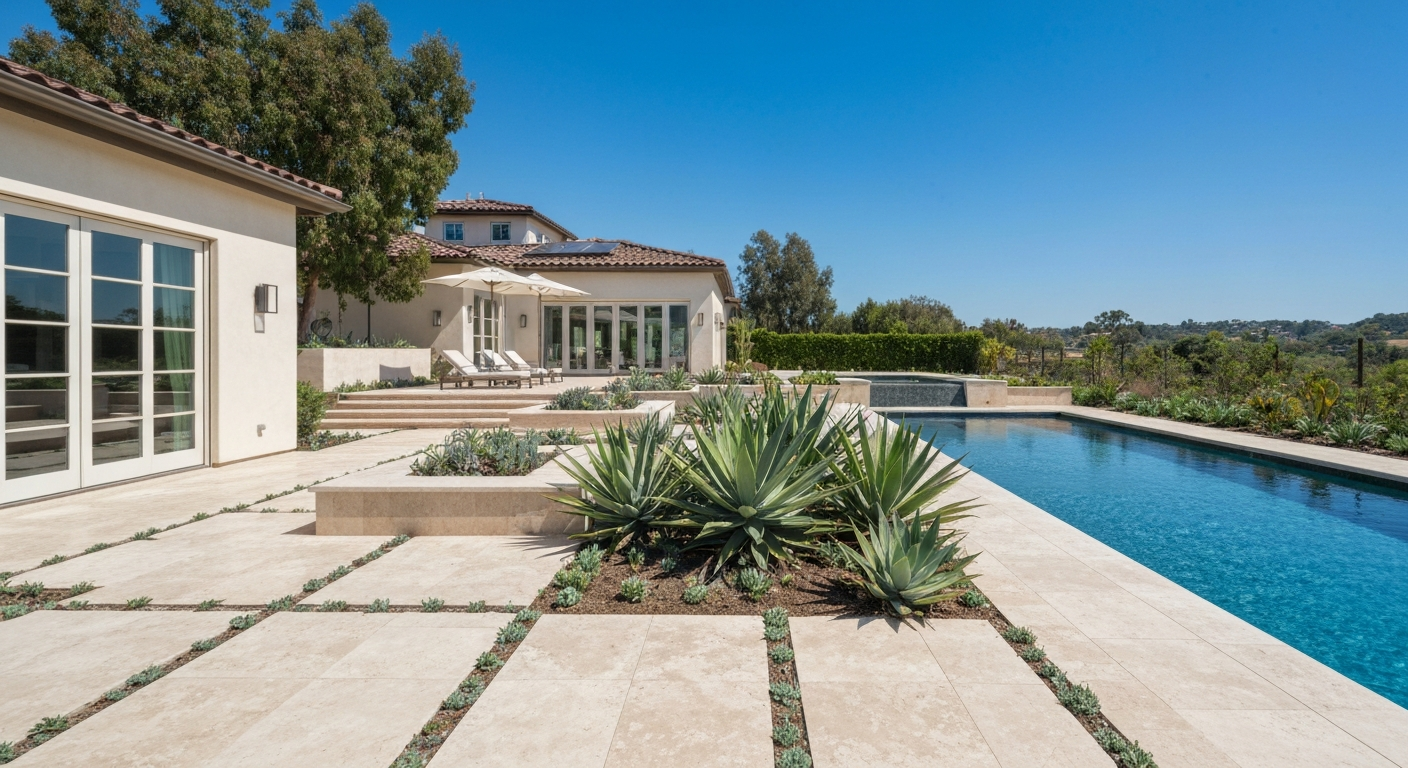
Patios, walkways, and other functional hardscape can reduce irrigated area while adding usable outdoor living space. Replacing a section of unused lawn with a patio or seating area can lower water demand and create a more functional backyard.
However, more hardscape is not automatically better. Large hardscape areas can affect drainage, runoff, surface temperature, shade needs, and the overall visual balance of the property. Not all pavers or concrete surfaces are permeable. Hardscape should be planned as part of the overall design, not simply added to reduce irrigated area. For broader planning, a landscape master plan can coordinate hardscape, planting, drainage, and irrigation together.
What role do trees and shade play?
Trees contribute vertical structure, shade, and visual scale. Thoughtfully placed shade can improve comfort in outdoor living areas and reduce the heat load on nearby planting. Trees also help a landscape feel established and layered rather than flat and sparse.
Tree selection should consider mature size, root behavior, water needs, and proximity to hardscape, pools, or structures. A lighting plan can highlight trees after dark to extend the landscape's visual value into the evening.
How do you make a drought-conscious landscape look intentional?
A water-wise landscape should still feel designed. Repetition of plant varieties, defined planting zones, consistent materials, layering, clear focal points, and appropriate scale all contribute to a deliberate appearance. Transitions between hardscape and planting should feel natural rather than abrupt.
Coordination with the home's architecture helps the landscape feel connected to the property rather than placed on top of it. The same principles that make any landscape feel high-end, such as proportion and material continuity, apply equally to water-wise design.
What should homeowners know about MWELO and local requirements?
California's Model Water Efficient Landscape Ordinance (MWELO) establishes water-efficiency standards that can apply to certain landscape projects. Applicability and requirements depend on the project and the local agency implementing the ordinance.
Ventura County includes incorporated cities as well as unincorporated areas, so requirements may vary depending on the property, project, and governing jurisdiction. Homeowners should verify applicable requirements with their city or Ventura County when appropriate. A general article cannot determine whether a specific project must comply or what those requirements entail.
Water-wise design decisions at a glance
| Design decision | Water-wise purpose | Design consideration |
|---|---|---|
| Plant selection | Lower water demand | Site conditions, mature size, maintenance |
| Hydrozoning | Efficient irrigation by water need | Grouping compatible plants in each zone |
| Irrigation | Deliver water precisely | Drip, smart controllers, leak monitoring |
| Turf reduction | Less irrigated area | Keep lawn where it is used, reduce where it is not |
| Trees and shade | Comfort and structure | Mature size, water needs, root behavior |
| Hardscape | Usable space without irrigation | Drainage, runoff, heat, visual balance |
| Mulch and soil | Moisture retention and plant health | Material choice, depth, and maintenance |
Frequently asked questions
Can a water-wise landscape still look lush?
Yes. Layered planting, trees, repeated palettes, and defined focal points can create a rich, textured appearance without relying on high-water-use turf. The key is cohesive design rather than scattering drought-tolerant plants across a bare yard.
Does water-wise landscaping mean removing all grass?
Not necessarily. Lawn can remain where it serves a real purpose, such as a play area. The goal is reducing turf where it is primarily decorative and replacing it with lower-water planting or functional hardscape that better serves the property.
Are drought-tolerant landscapes mostly succulents?
No. Suitable plants include California-appropriate species, Mediterranean-climate plants, trees, shrubs, ornamental grasses, groundcovers, and succulents used as accents. Hydrozoning groups plants with similar water needs for more efficient irrigation.
What is MWELO?
California's Model Water Efficient Landscape Ordinance establishes water-efficiency standards that can apply to certain landscape projects. Applicability and requirements depend on the project and the local agency implementing the ordinance.
Can hardscaping make a landscape more water-wise?
Yes, by replacing irrigated lawn with usable patios or walkways. However, excessive hardscape can affect drainage, runoff, and surface temperature. Hardscape should be planned as part of the overall design, not simply added to reduce water use.
Ready to Create a Beautiful, Water-Wise Landscape?
Colima Landscape Inc. can help plan how planting, irrigation, hardscape and outdoor living areas work together around your property. Schedule a consultation to discuss your landscape and design goals.
Discuss Your Water-Wise Landscape*This article provides general planning information. Water savings, MWELO applicability, permit requirements, and landscape performance depend on the property, jurisdiction, plants, irrigation system, and proposed work.*