How Can Landscape Lighting Improve Safety and Ambiance?
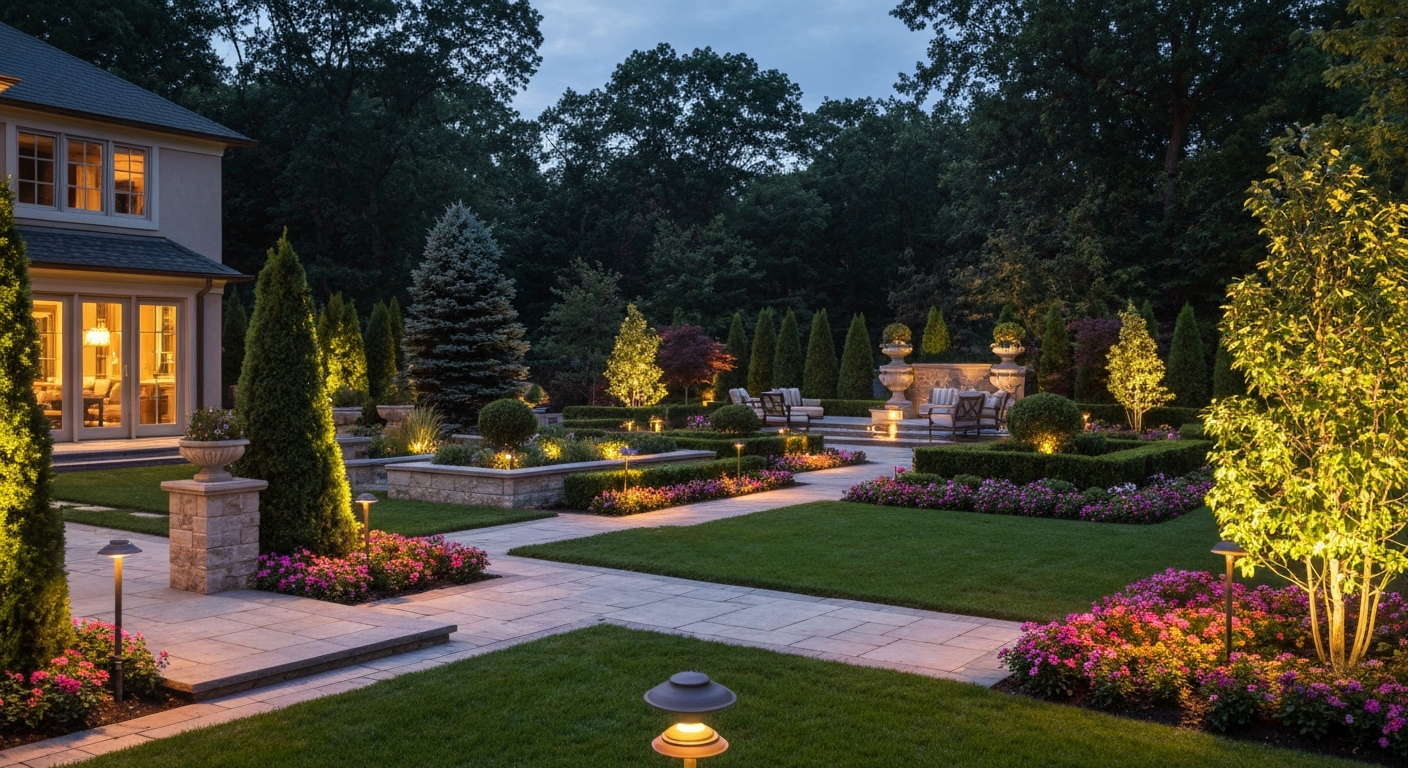
Thoughtful landscape lighting can improve nighttime visibility around paths, entrances and gathering areas. It may complement other property-security measures, but lighting alone cannot prevent trespassing, theft or other crime.
Good outdoor lighting is not simply about adding more brightness. Fixture placement, shielding, color temperature and controls all affect whether the result feels comfortable, useful and appropriate for the property.
Direct Answer
Landscape lighting may improve visibility, comfort and ambiance when fixtures are carefully selected and placed. It can complement other security measures, but it cannot prevent crime on its own. Brightness, glare control, color temperature and compatible controls all influence how the finished system performs.
What is architectural landscape lighting?
Architectural landscape lighting coordinates functional and decorative illumination with the home, landscape and the way outdoor areas are used. Instead of adding a single bright fixture, it layers path lighting, step lighting, accent lighting and task lighting so each area receives an appropriate level of light for its purpose.
The goal is to make the property more usable after dark while keeping the lighting comfortable, directed and consistent with the architecture and surrounding landscape.
Can outdoor lighting make a property more secure?
Improved visibility, perceived security and crime prevention are related concepts, but they are not interchangeable. Carefully placed fixtures can improve visibility in selected areas and reduce abrupt transitions between bright and dark zones. That may make a property feel safer to walk through at night.
However, lighting alone cannot prevent trespassing, theft or other crime. Landscape lighting is not a substitute for cameras, locks, alarms or other security measures. No lighting layout can guarantee that a property will not be targeted. Excessively bright fixtures can even reduce visibility by creating glare that makes adjacent darker areas harder to see.
Homeowners should not expect a lighting installation to deliver complete surveillance coverage or eliminate every dark area. Dense planting, structures and changing site conditions can all affect what remains visible after dark.
Which areas of a property should be illuminated?
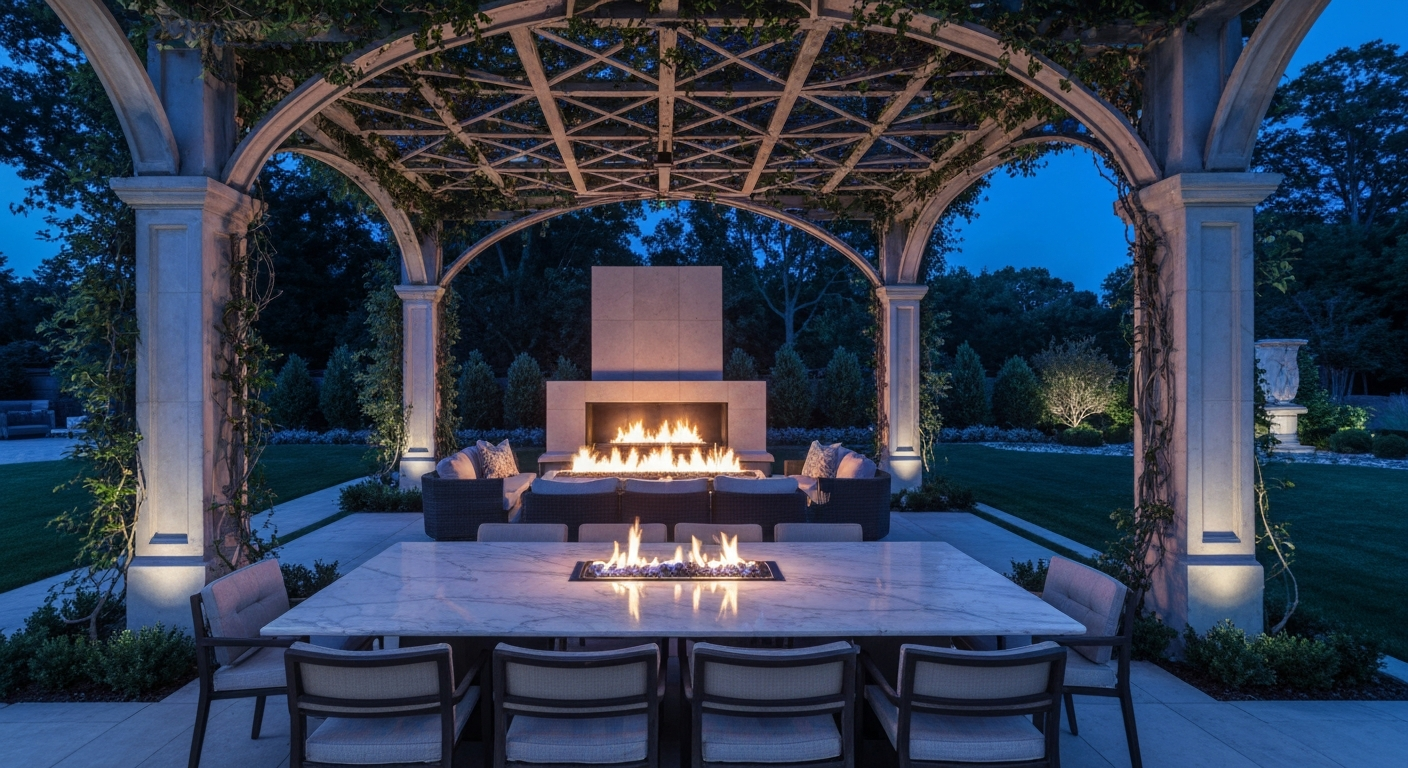
The answer depends on how the property is used. Potential lighting areas include walkways, steps and elevation changes, entrances, gates, driveways, patios, outdoor kitchens, seating and dining areas, pool or spa surroundings where applicable, retaining walls, trees and planting, house numbers, and service or utility areas.
Task areas, walking routes and changes in elevation may require different lighting than decorative focal points. Not every area needs to remain illuminated all night, and landscape lighting does not replace lighting or electrical systems required by applicable codes.
What is the difference between path, accent and task lighting?
Different lighting techniques serve different purposes. The table below summarizes the most common approaches.
| Lighting technique | Common purpose | Important consideration |
|---|---|---|
| Path lighting | Improves visibility along walkways | Poor spacing can create distracting bright spots |
| Step lighting | Defines changes in elevation | Fixtures should avoid shining directly into people's eyes |
| Uplighting | Highlights trees or architectural features | Excessive uplight can contribute to glare and sky glow |
| Downlighting | Illuminates paths or gathering areas from above | Placement should avoid harsh shadows |
| Wall washing | Adds soft light across a surface | Brightness and beam spread should fit the wall |
| Task lighting | Supports cooking, gates or work areas | It requires enough light for the specific activity |
| Motion-activated lighting | Provides light when activity is detected | Sensitivity and duration should be adjusted carefully |
Not every property needs every technique. The appropriate combination depends on the layout, intended use and surrounding conditions.
How bright should outdoor lighting be?
Outdoor lighting should generally be bright enough for the intended activity without causing glare or unnecessarily illuminating surrounding areas. The appropriate level depends on the location, task, fixture, mounting position and surrounding conditions.
A walkway and an outdoor cooking surface have different lighting needs. Decorative accent lighting may require less output than task lighting. Fixture output alone does not determine perceived brightness; beam angle, distance, surface color and surrounding darkness all matter. More lumens do not automatically produce a better result. Dimming or multiple lighting zones may provide flexibility for different activities and times of evening.
How can glare and light trespass be reduced?
Poorly planned lighting can reduce comfort and visibility. Glare may make it harder to see nearby darker areas, and light that spills onto neighboring properties can create avoidable conflict.
Glare and light trespass may be reduced through shielded fixtures, downward aiming, careful beam direction, appropriate fixture height, appropriate brightness, proper spacing, and avoiding unnecessary uplighting or all-night illumination. Reflections from windows or glossy surfaces should also be considered.
More light is not always better. Responsible outdoor lighting is useful, directed only where needed, no brighter than necessary, controlled with timers or sensors, and warmer in color where practical. DarkSky International and the Illuminating Engineering Society publish guidance on these principles.
What color temperature works best outdoors?
Warmer light often creates a softer, more comfortable appearance in residential settings. Cooler light may appear harsher or more clinical. The right choice depends on the task, materials, architecture and desired atmosphere.
Consistency between nearby fixtures can improve visual cohesion. Color temperature is separate from brightness; a warm fixture and a cool fixture can produce the same lumen output while looking very different. Excessively cool or blue-rich light may contribute more to glare or nighttime environmental effects. No single color temperature is universally correct for every location.
Can landscape lighting use smart controls?
Some landscape-lighting systems can integrate with compatible smart-home platforms, timers, photocells, motion sensors or app-based controls. Compatibility should be confirmed for the selected equipment and the home's existing system.
Compatibility can depend on transformer and controller type, voltage, communication protocol, Wi-Fi coverage, manufacturer ecosystem, hub requirements, existing wiring, dimming support, app support, voice-assistant support, and available integrations. Not every system can connect to Wi-Fi, work with every smart-home platform, respond to voice commands, follow sunset automatically, create custom scenes, or dim every fixture. Professional electrical work may be required for some installations.
What should homeowners consider before installation?
A practical checklist before installing landscape lighting:
- Identify the areas that need functional light
- Separate task lighting from decorative accent lighting
- Consider walking routes, steps and elevation changes
- Select brightness appropriate for each activity
- Plan fixture placement to limit glare and light trespass
- Consider color temperature and consistency
- Decide whether timers, photocells, motion sensors or dimming are useful
- Confirm equipment and smart-home compatibility
- Review existing wiring, transformers and power availability
- Confirm applicable HOA, permit, electrical and licensing requirements
- Consider access for installation and future maintenance
- Define how the lighting fits the broader landscape plan
For Ventura County homeowners, property-specific decisions may be affected by hillside or sloped lots, steps and elevation changes, coastal versus inland exposure, mature trees and planting, neighboring homes, lot size, existing patios and outdoor kitchens, HOA design rules where applicable, wildlife and dark-sky considerations, fire-risk considerations where applicable, existing wiring and electrical capacity, and the exact city or county jurisdiction. Requirements depend on the address, jurisdiction, equipment and scope. Not every Ventura County property is on a slope, has an HOA, has coastal exposure, or requires a permit.
Frequently asked questions
Does outdoor lighting prevent crime?
No. Lighting may improve visibility and complement other security measures, but it cannot prevent trespassing, theft or other crime on its own. Cameras, locks, alarms and other measures remain necessary. No lighting layout guarantees a property will not be targeted.
What areas of a yard should be illuminated?
Walkways, steps, entrances, gates, driveways, patios, seating and dining areas, and changes in elevation commonly benefit from lighting. The appropriate areas depend on how the property is used. Task areas and walking routes may need different lighting than decorative focal points.
How bright should landscape lighting be?
Bright enough for the intended activity without causing glare or unnecessary spillover. A walkway and a cooking surface have different needs. Fixture output, beam angle, distance and surrounding darkness all affect perceived brightness. More lumens do not automatically produce a better result.
Can landscape lighting connect to a smart-home system?
Some systems can integrate with compatible smart-home platforms, timers, photocells, motion sensors or app-based controls. Compatibility depends on the transformer, controller, communication protocol, Wi-Fi coverage and manufacturer ecosystem. It should be confirmed for the selected equipment before installation.
Does landscape lighting require a permit?
Permit and installation requirements depend on the location, voltage, wiring method and project scope. Some projects may require permits, inspections or an appropriately licensed electrical contractor. Homeowners should confirm applicable requirements with their city or Ventura County before beginning regulated work.
Planning Your Outdoor Lighting?
Colima Landscape Inc. can help you consider how lighting fits with patios, walkways, planting and outdoor-living areas. Schedule a consultation to discuss your property, priorities and overall landscape plan.