The Rise of Resort-Style Fire Lounges in Thousand Oaks
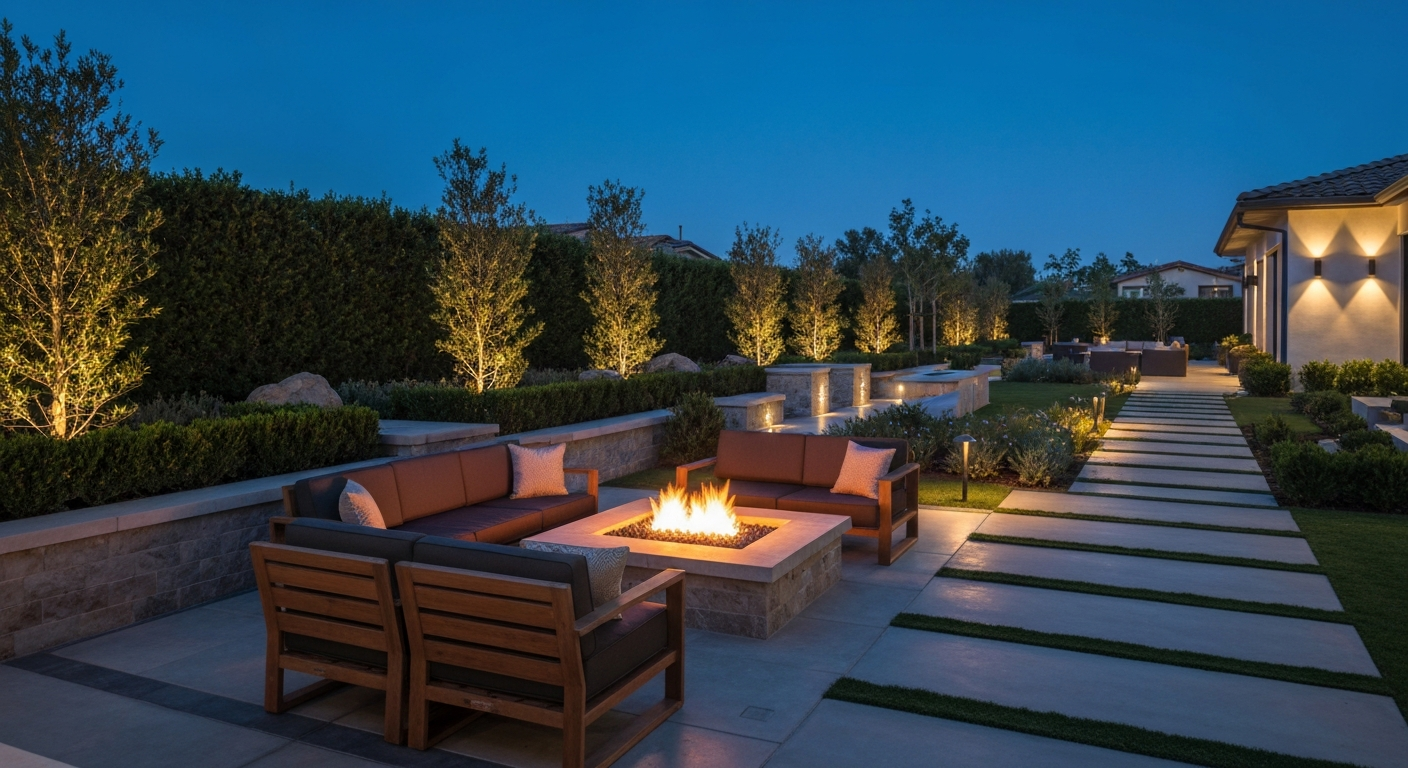
A fire lounge combines a fire feature with intentional seating and surrounding landscape design to create a defined outdoor gathering area. It brings warmth, light and a focal point to the backyard, extending comfortable use of outdoor spaces into cooler evenings.
There is no single formula. The right approach depends on the property, how the space will be used, the selected fire system, fuel type, seating, surrounding materials and applicable safety or permit requirements. A fire lounge is a design concept, not a single product.
Key Takeaways: Planning a Backyard Fire Lounge
- A fire lounge combines a fire feature, seating and surrounding landscape as one coordinated space.
- Fire pits and outdoor fireplaces create different layouts and seating orientations.
- Fuel choice, clearances, manufacturer requirements and local regulations all affect what is possible.
- Permit and fire-safety requirements depend on the feature, fuel, property and jurisdiction.
- The design should connect with patios, walkways, planting and other outdoor-living areas.
Why are fire lounges becoming popular in Thousand Oaks?
A fire lounge gives a backyard a defined gathering point after dark. Instead of a fire feature sitting alone on a patio, the fire element, seating, hardscape, lighting and surrounding planting are planned together. The result feels more like an outdoor room than a single appliance on a slab.
Thousand Oaks properties vary in slope, vegetation, lot size and exposure. Some homes border open space with different fire-safety considerations, while others sit in established neighborhoods with different conditions. A fire lounge that works well on one property may not be appropriate for another.
What exactly is a backyard fire lounge?
"Fire lounge" is primarily a design concept rather than a specific regulatory or construction category. It may combine a fire pit, fire table or outdoor fireplace with built-in or movable seating, a patio or hardscape surface, planting, lighting and nearby outdoor-living features.
The specific design depends on the property and how the homeowner wants to use the space. Some fire lounges are intimate seating areas for a few people, while others anchor a larger entertaining space connected to an outdoor kitchen or patio.
Where should a fire lounge go in the backyard?
Placement affects both function and safety. A fire lounge should be positioned with attention to the relationship to the house, seating circulation, views, existing vegetation, nearby combustible materials, other structures and features, slope, drainage, lighting and site exposure.
Actual required placement depends on the selected fire system, fuel type, manufacturer clearances and applicable local requirements. A location that looks spacious in a photograph may not provide the necessary clearances at another property. Final placement should be reviewed against the specific feature, property conditions and governing requirements.
Is a fire pit or outdoor fireplace better?
Neither is universally better. The choice depends on layout, aesthetic preferences, available space and intended use.
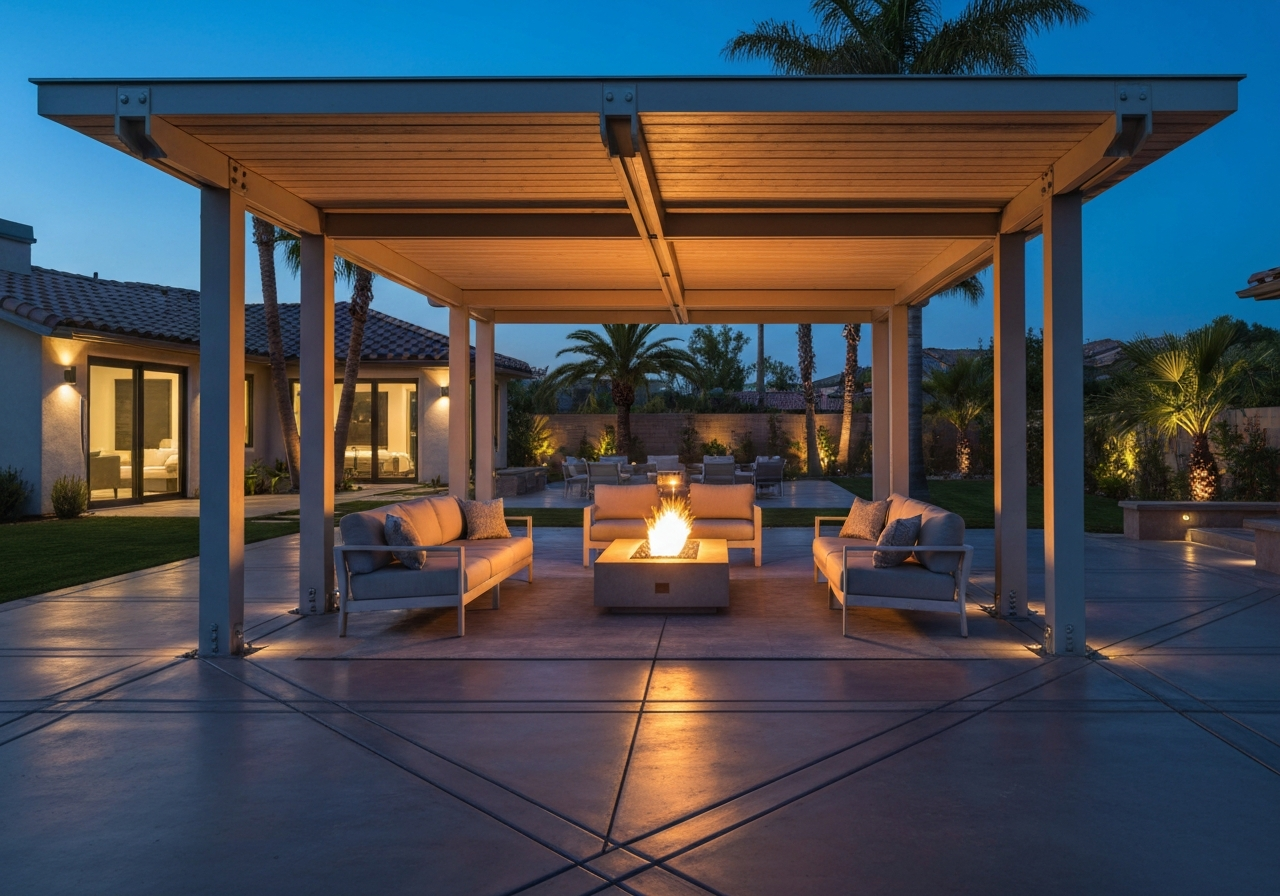
A fire pit or fire table is often lower in profile and can support seating on multiple sides, functioning as a central gathering element. It may preserve more open sightlines depending on the design.
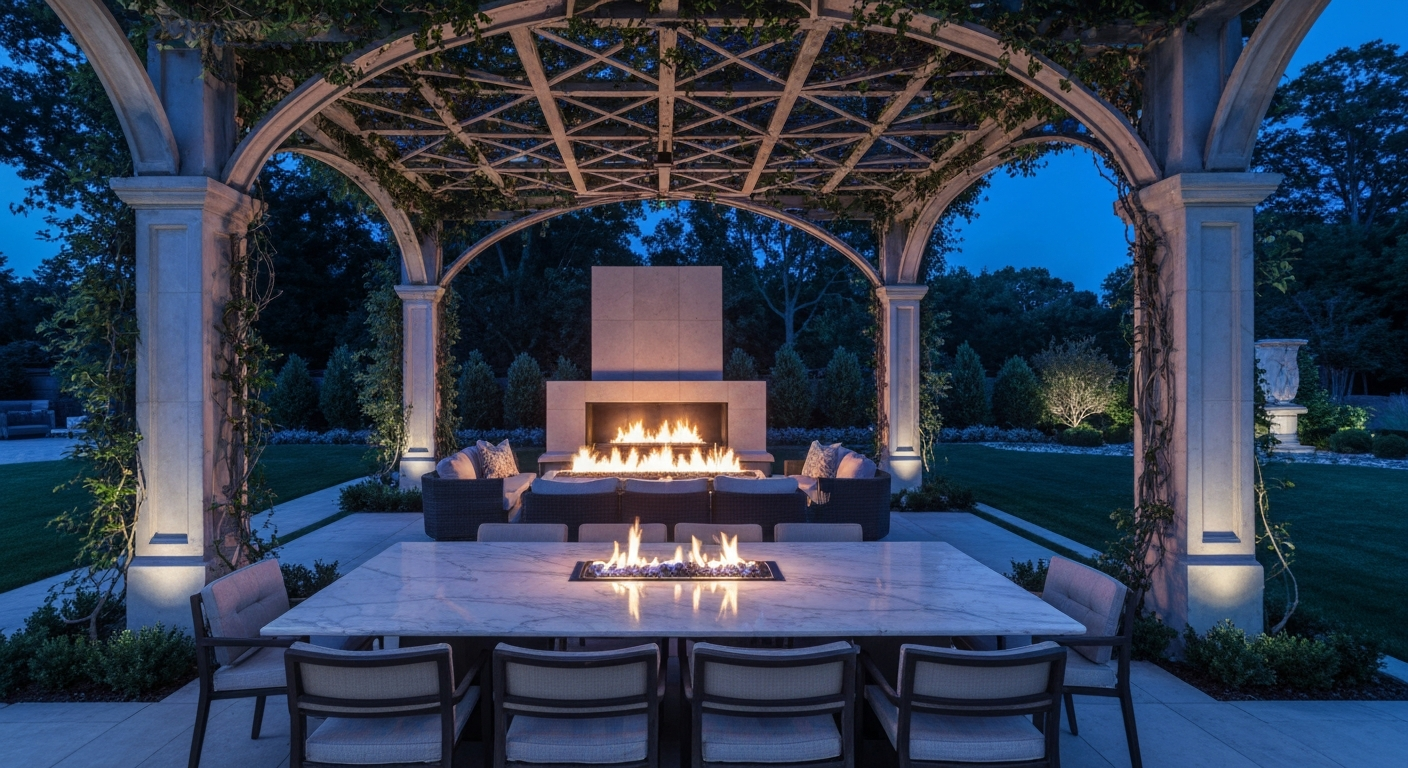
An outdoor fireplace creates a stronger vertical architectural feature and usually establishes a more front-facing seating orientation. It can visually anchor an outdoor room, but its height and placement may have a larger effect on views and circulation.
How should seating be designed around a fire feature?
Seating determines whether a fire lounge actually works well. Planning should consider built-in versus movable seating, seating orientation, conversation distance, access in and out of the area, circulation around the feature, sightlines, backs versus backless seating, and integration with surrounding patio areas.
There is no universal seating distance. The appropriate layout depends on the fire feature, its dimensions, manufacturer clearances, the number of people the space should accommodate and how much room people need to move comfortably. Posts, walls and surrounding hardscape can all reduce usable space.
What materials work around an outdoor fire feature?
Material selection should consider appearance, heat exposure, weather exposure, maintenance, durability, compatibility with the fire-feature system, manufacturer requirements and applicable codes. Potential materials may include concrete masonry, natural stone, manufactured stone veneer, brick, selected concrete products and compatible caps or trim.
A decorative stone, paver, veneer or other product should not be assumed suitable for direct or repeated heat exposure unless its intended use has been confirmed. No material should be casually described as fireproof. Product-specific evaluation matters.
Natural gas or propane: what should homeowners consider?
Neither fuel is universally best. Natural gas provides a permanent fuel connection but requires routing to the feature location. Propane uses stored or portable fuel, which offers placement flexibility but involves tank storage, refilling and transport considerations.
Each option has different installation requirements, manufacturer specifications and applicable codes. Fuel-system installation and any regulated gas work should be handled by an appropriately qualified professional. Homeowners should not attempt DIY gas-line work, and the selected system should be reviewed for the specific property and project.
What permits and fire-safety requirements may apply in Thousand Oaks?
Built-in fire features may be subject to building, plumbing, gas, electrical and fire-safety requirements depending on the design, fuel source, installation and property location. Requirements are not identical for every project.
Properties within the City of Thousand Oaks generally begin with the City's Building Division, while different agencies may apply outside city limits. Homeowners should verify the permits and requirements applicable to their specific project before construction. The City of Thousand Oaks Building Division and the Ventura County Fire Department are starting points for applicable requirements.
Fire-safety planning should consider surrounding vegetation, combustible materials, property conditions, fuel type and manufacturer specifications. A properly designed fire lounge does not make a property wildfire-safe. Recreational fires and permanently installed gas fire features may be regulated differently. Homeowners should confirm current requirements rather than relying on general guidance.
How does landscaping affect fire-feature planning?
Fire-feature planning should account for the surrounding landscape rather than treating the fire element in isolation. Planting, hardscape, circulation, views, lighting, drainage and site conditions all affect how the area functions.
Nearby vegetation, overhanging branches, irrigation overspray and leaf debris can all influence safety and maintenance. No plant should be described as fireproof or universally appropriate around a fire feature. Plant selection and placement should respond to the specific feature, exposure and property conditions.
How can a fire lounge connect with a patio, pool or outdoor kitchen?
A fire lounge often works best when it connects thoughtfully with the rest of the backyard. Depending on the property, it may relate to a patio, outdoor kitchen, dining area, pool, garden, walkways, lighting and other gathering areas.
The key question is how people actually move through and use the entire backyard. A fire feature placed too far from other activity areas may feel disconnected, while one placed too close to cooking or pool equipment may create circulation or safety conflicts. Planning connected elements together helps identify clearances, utilities, material transitions and construction sequencing.
What should you decide before designing a fire lounge?
A practical pre-design checklist:
- How do we want to use this area?
- How many people should it accommodate?
- Fire pit, fire table or fireplace?
- Built-in or movable seating?
- What views should remain open?
- How will people enter and leave the seating area?
- What other outdoor features are nearby?
- What vegetation or combustible materials need consideration?
- Which fuel option fits the project?
- How will the feature integrate visually with the rest of the yard?
- What manufacturer requirements apply?
- What permits or local requirements need to be verified?
Thousand Oaks properties may differ in slope, vegetation, exposure, lot configuration, surrounding open space and microclimate. A design appropriate for one property may not work for another.
Frequently asked questions
Do I need a permit for a fire pit in Thousand Oaks?
Requirements depend on the type of feature, fuel source, installation and project scope. A built-in gas fire pit may involve different permits and inspections than a portable propane unit. Homeowners should verify requirements with the City of Thousand Oaks Building Division and applicable fire-safety authorities for their specific property and project before construction.
Is a fire pit or outdoor fireplace better for a backyard?
Neither is universally better. A fire pit or fire table often supports seating on multiple sides and preserves open sightlines. An outdoor fireplace creates a stronger vertical focal point with a more front-facing seating orientation. The right choice depends on layout, space, aesthetic preferences and intended use.
Can a fire lounge be built near a pool or outdoor kitchen?
Integration may be possible, but placement depends on the backyard layout, equipment specifications, applicable clearances and project-specific safety and code considerations. A fire feature should not be placed near a pool or cooking area solely because an inspiration photograph shows a similar arrangement. The specific feature, fuel, manufacturer requirements and site conditions must be evaluated.
Is natural gas or propane better for an outdoor fire feature?
Neither fuel is universally best. Natural gas offers a permanent connection without tank refilling, while propane offers placement flexibility with stored fuel. Each has different installation requirements, codes and operating considerations. The selected system should be reviewed for the specific property, and regulated gas work should be handled by an appropriately qualified professional.
How much space do you need for a backyard fire lounge?
There is no universal square-foot requirement or clearance distance. Required space depends on the fire feature, seating type and count, circulation, manufacturer instructions and applicable requirements. A small fire table with four chairs needs less room than a large fireplace with built-in seating. The layout should be planned around the actual feature and furniture.
Planning a Fire Lounge for Your Backyard?
Colima Landscape Inc. can help you think through how a fire feature, seating, hardscape, planting and other outdoor-living elements fit together across your space. Schedule a consultation to discuss your property and design goals.
Book Consultation